
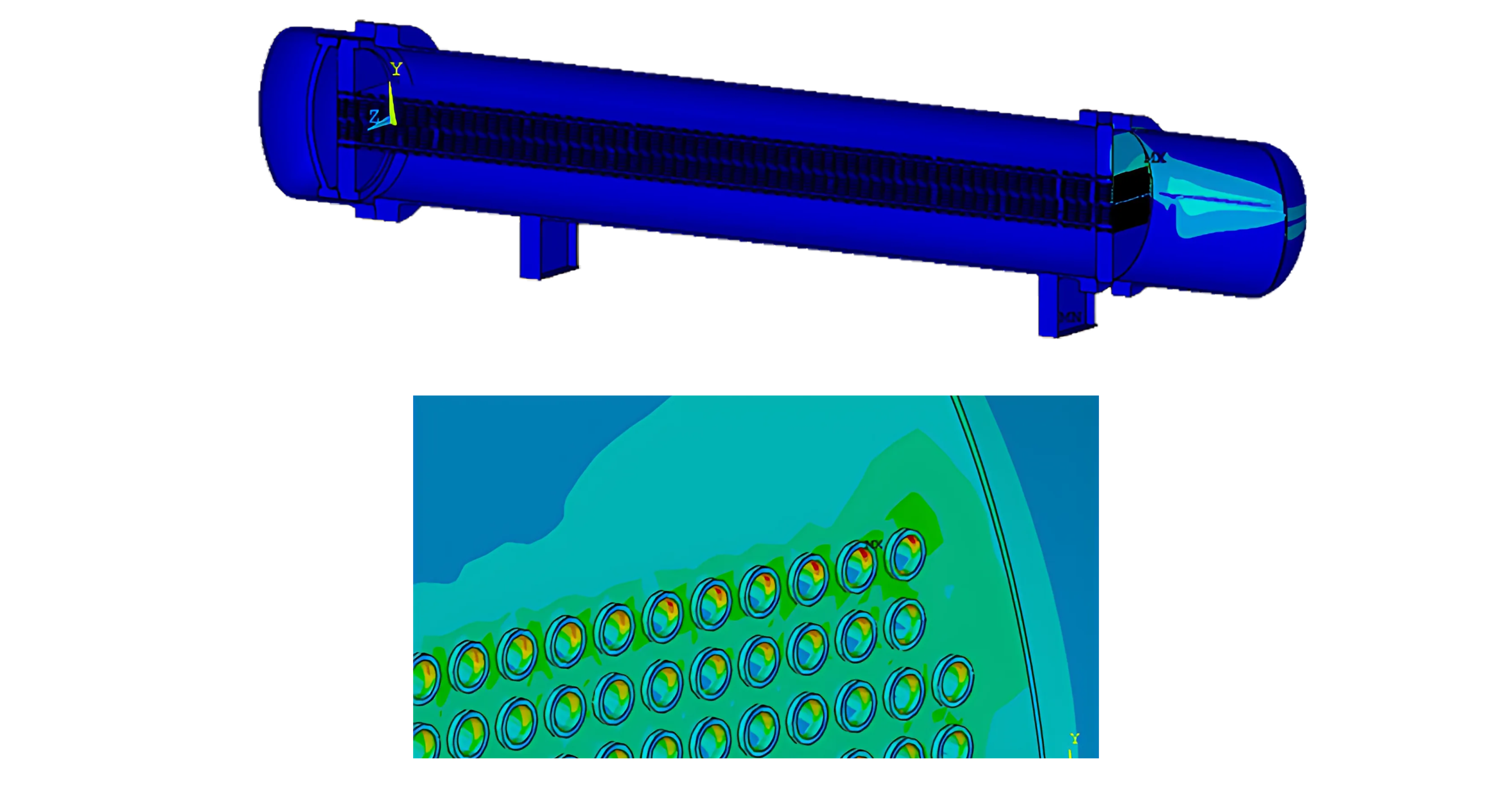
Thermal Analysis of Process Equipment
April 7, 2023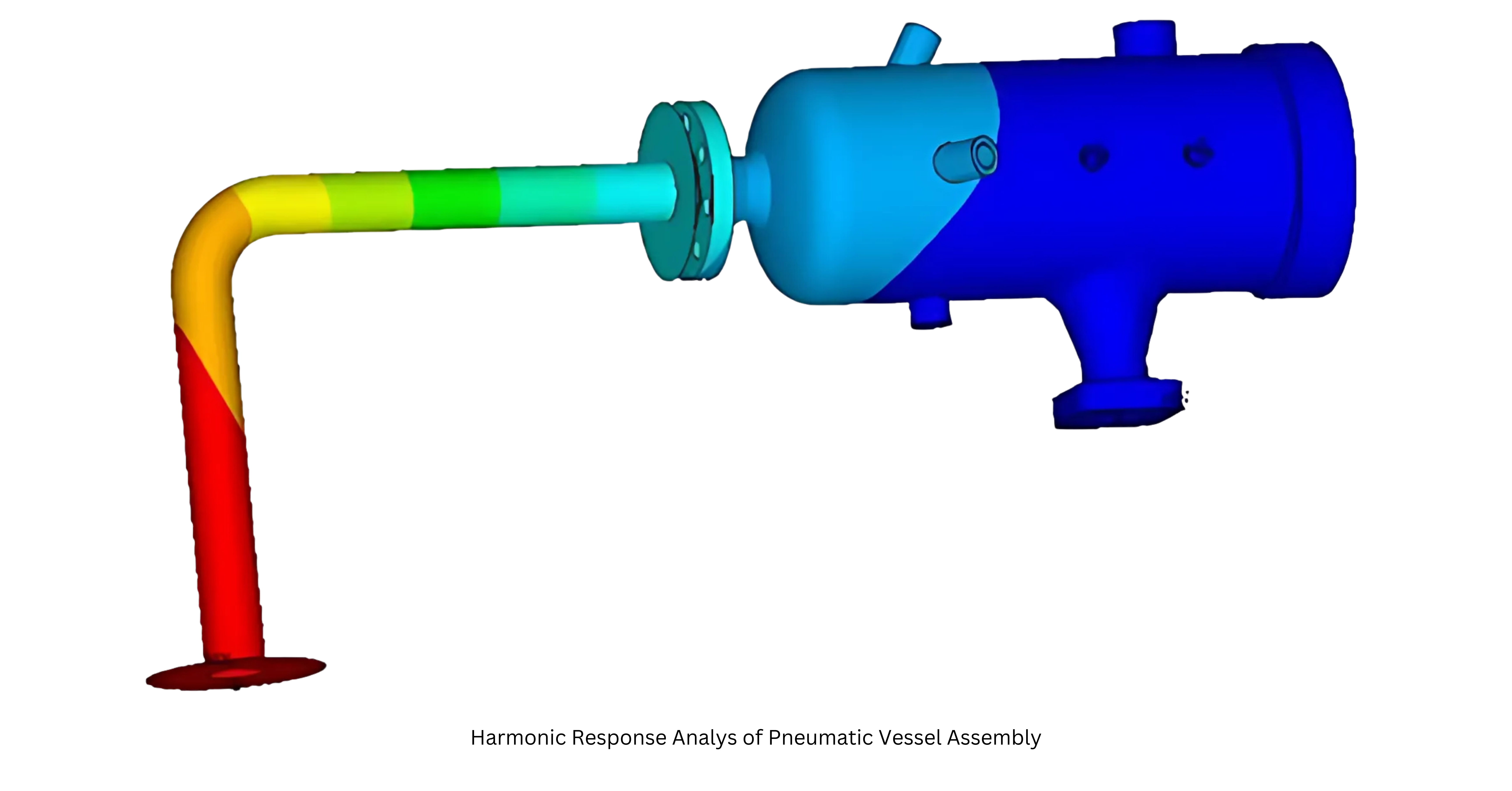
Harmonic Responce Analysis of Structure
April 7, 2023Introduction
FEA of most of the components is performed to study the actual behaviour of the structure. It is generally performed by elastic stress analysis approach which is quick & reliable. But in some cases, more accurate evaluation against plastic collapse is required. This requirement is satisfied by elastic plastic analysis of the structure. This approach of analysis considers material as well as structural non-linearity into consideration for FEA resulting a more accurate approximation of actual structure.
Process equipment manufacturer from India & Abroad approached ANALYZER to seek assistance in evaluating the design of their newly developed equipment to multiple loading conditions using simulation techniques & provide the solution in case of any observed failure.
Workflow
- Determining the material properties for different MoCs of equipment, design parameters to be considered in FEA.
- Preparing FEA Model for elastic plastic stress analysis. Here the element type is of utmost importance as very few elements supports plastic properties & gives reliable results.
- Extracting the Stress-Strain curve for MoC as its important from material non-linearity point of view. This data is provided as input in solver.
- Solving the model for elastic plastic stress analysis. The load combinations are used from Table 5.5 of ASME Sec. VIII Div. 2.
- Convergence for unit loading is important in this type of analysis, showing capability of structure for designed loading. Also, induced strain check is a secondary check in elastic plastic stress analysis.
CHALLENGES
- Deciding the element type which satisfies plasticity & gives accurate results,
- Calculations of Stress Strain curve for MoC/s.
SOLUTION
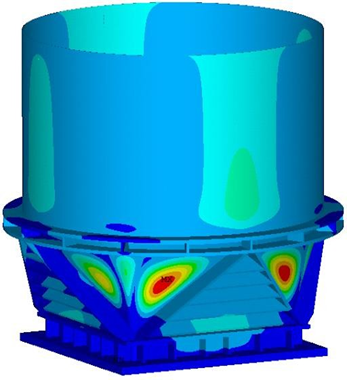
The structure was analysed using FEM for elastic plastic stress analysis. The loading combinations are used from table 5.5 of ASME Sec. VIII Div.2. To consider material non-linearity, stress-strain curve is provided as an input to the MoC/s & for structural non-linearity, large deflection is considered in FEA.
The solution shows that the structure is capable of designed loadings also the induced strain is within the allowable limit. Hence, the design was predicted to behave safe during operation without premature failure.
BENEFITS
- Designs can be evaluated more accurately
- Design modification based on actual behaviour of the structure is made possible
- Reduced manufacturing time