

FEA of Chassis
April 7, 2023
Airport HVAC
April 8, 2023
Introduction
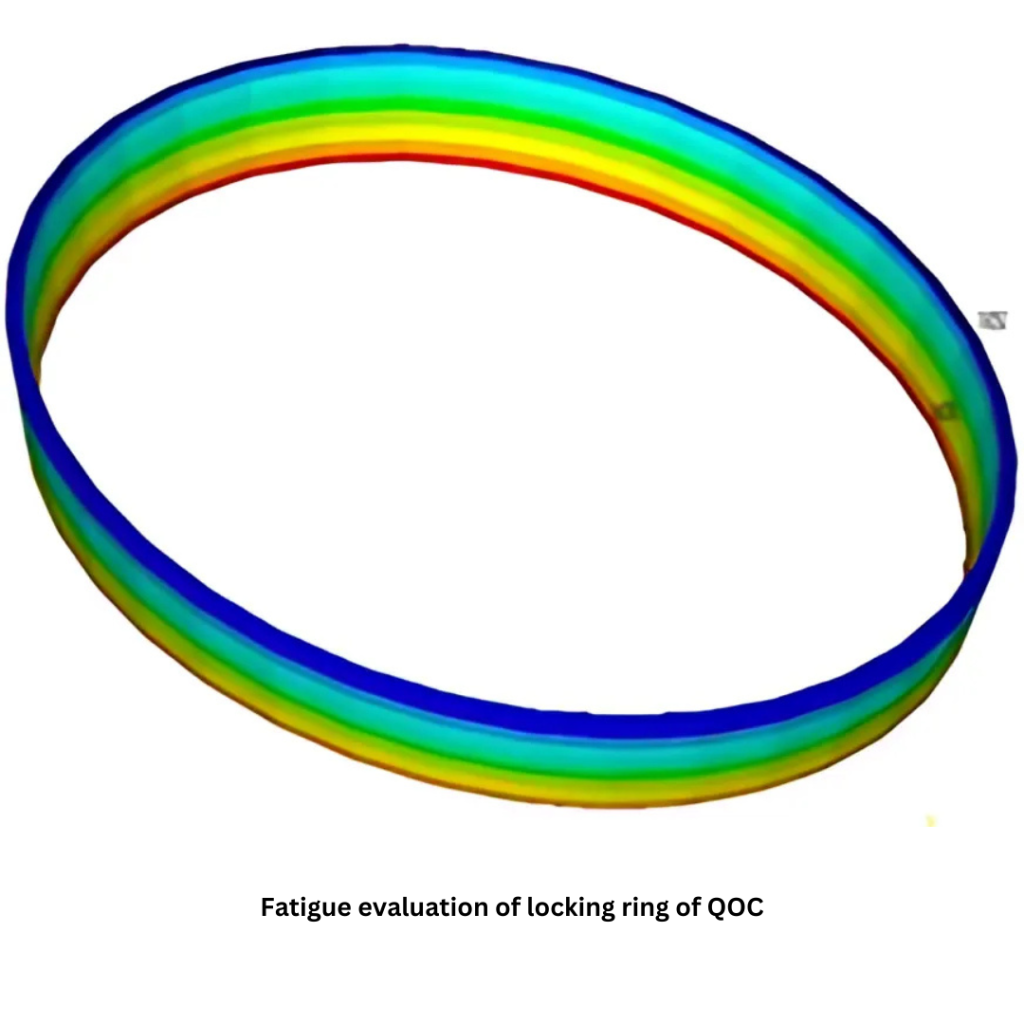
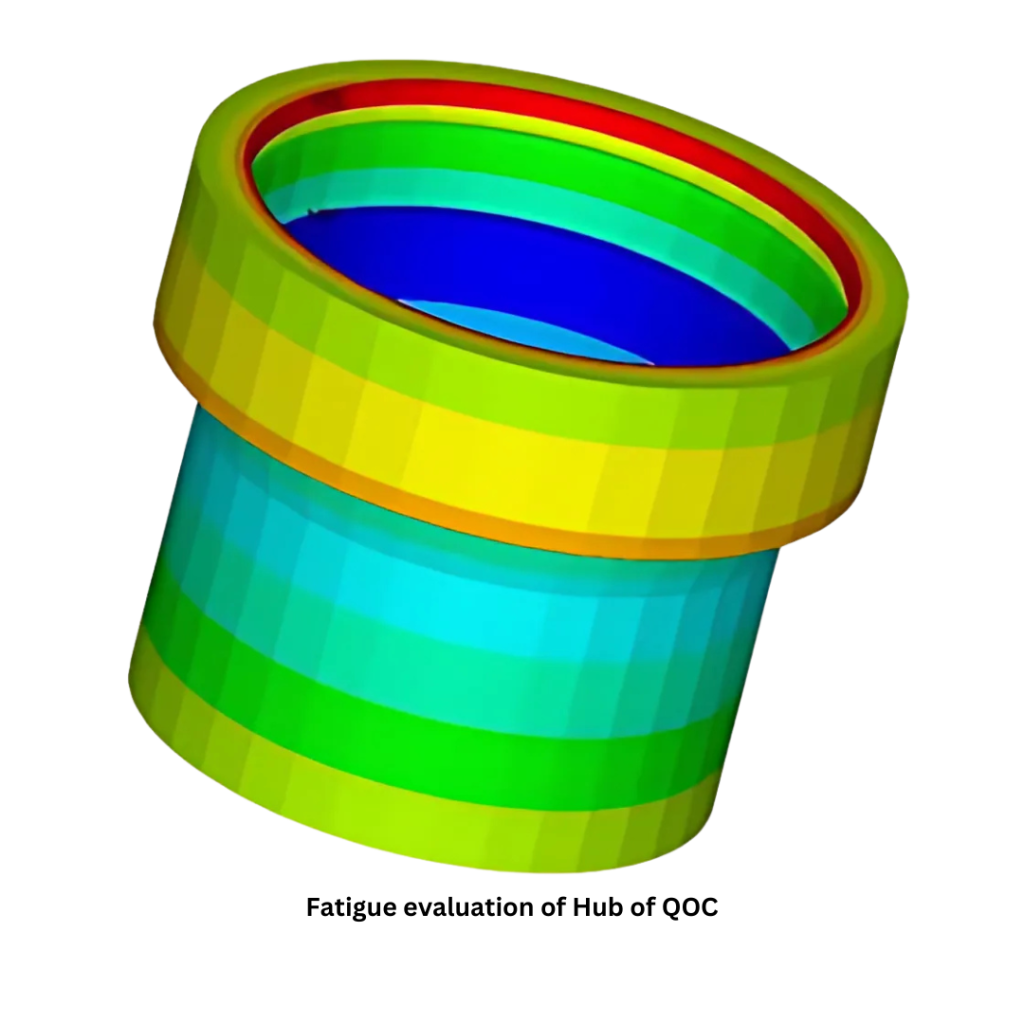
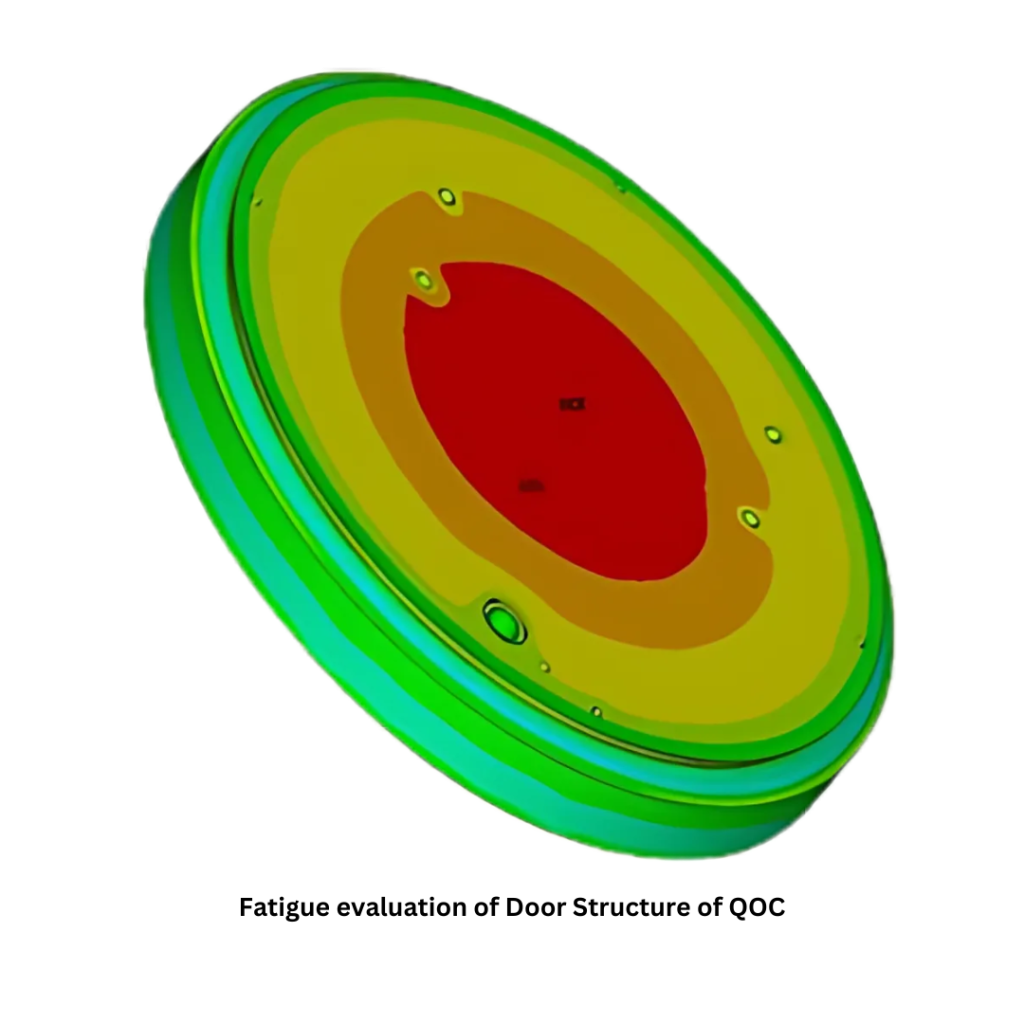
Quick Opening Closure (QOC) is door in pressure vessel & boilers, which also serves as a head. It is locked at its position by locking mechanism. QOC’s always comes under the influence of mechanical static & fatigue loadings.FEA gives better understanding of actual behaviour of assembly due to various static & fatigue loadings. Main door structure, hub, locking ring are critical components of QOC assembly, which can be analysed by FEA. Due to asymmetric nature of static loadings, structure may result in higher localized stresses; while fatigue loading is dangerous than other loadings as the structure will experience sudden failure without any prior indication. Process equipment manufacturer from India & Abroad approached ANALYZER CAE Solutions to seek assistance in evaluating the design of their newly developed QOC’s to multiple loading conditions using simulation techniques & provide the solution in case of any observed stress failure.
Challenges
- Preparing complete structural Hexahedral mesh for door which has holes at different depths & without losing small geometrical details such as fillets & weld chamfers.
- Deciding element types for different analysis cases.
- Simplifying FEA model of locking ring & hub for axisymmetric analysis.
- Identifying the critical locations & carrying out stress linearization at those locations
SOLUTION
Fatigue Analysis:
The QOC was analysed using Finite Element Method to determine the induced stresses due to various cyclic loadings. To assess fatigue strength for the QOC, guidelines from ASME Section VIII Div. 2 part 5 & Annexure 3.F were utilized. The fatigue calculations were performed & fatigue damage factor is found much below unit value. Hence, the structure’s design was predicted to behave safe during operation without premature failure.
Static & Dynamic Analysis:
The QOC was analysed using Finite Element Method to determine the induced stresses due to various loading conditions. To assess strength of complete QOC, guidelines from ASME Section VIII Div. 2 Ed. 2013 were utilized. Stress Linearization has been carried out at various locations. The results showed that the induced stresses were well within the acceptable limits as per guidelines even for optimized thickness. Hence, the structure’s design was predicted to behave safe during operation without premature failure.
BENEFITS
- Better insights on design modifications for alternate applications
- Optimized design with reduced material cost
- Reduced manufacturing time