

Optimizing Airflow in High-Rise Buildings: A CFD Analysis for Efficient Ventilation – Analyzer CAE Solutions
April 11, 2025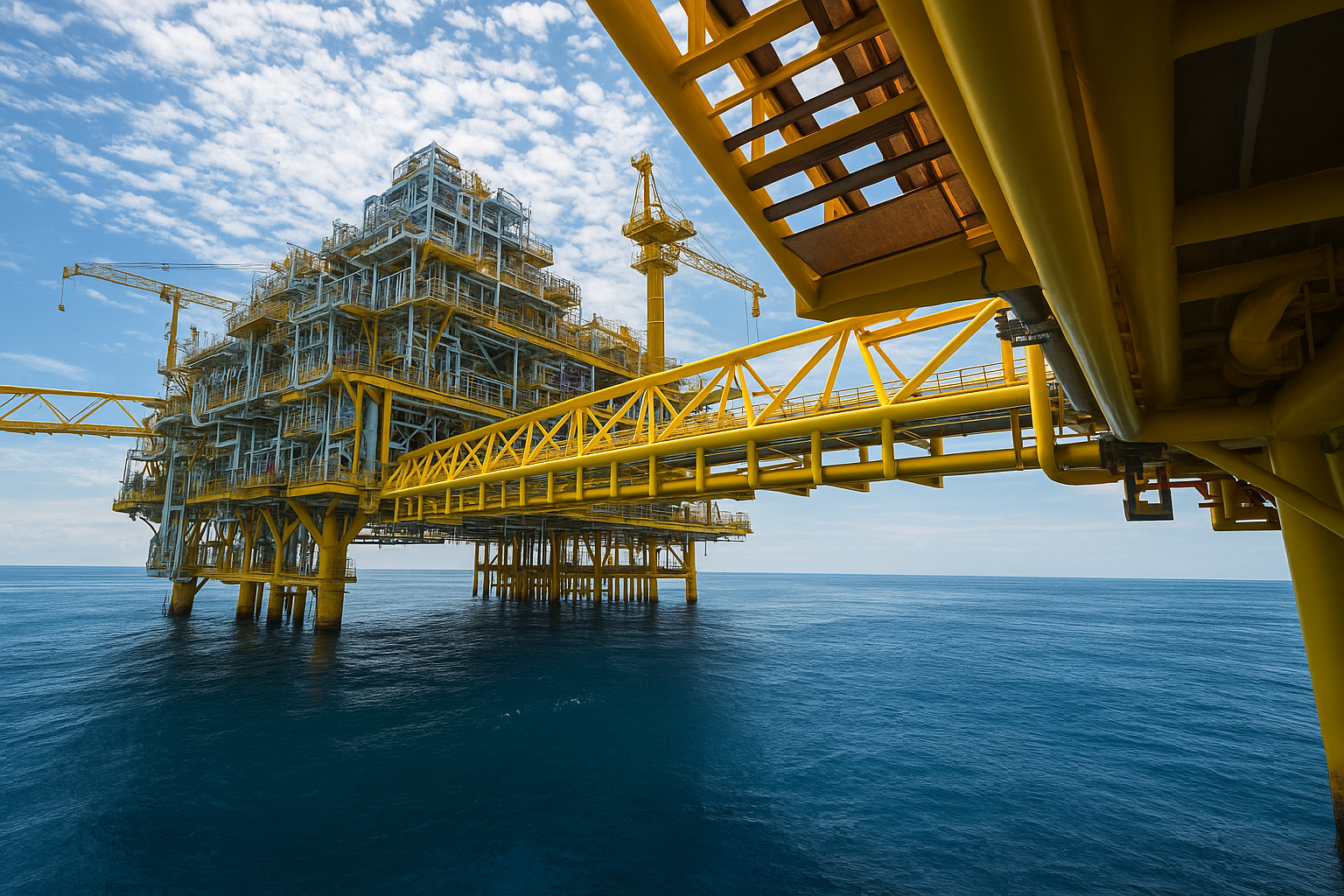
The Role of Steel Structures in Modern Engineering – FEA Analysis
April 18, 2025
Enhancing Efficiency & Reliability in Piping Systems
Technical insight from Analyzer CAE Solutions covering engineering simulation, design validation and practical CAE applications for industrial decision-making.
Piping systems are critical to industries such as oil & gas, power generation, chemical processing, and manufacturing. Ensuring their structural integrity and operational reliability is essential to prevent costly downtime, environmental hazards, and safety risks. Robust piping layout design plays a crucial role in optimizing space planning, equipment placement, and routing while adhering to industry standards and design codes.
With increasing complexity in industrial applications, traditional methodologies often fall short in addressing all potential failure modes. 3D modelling using advanced software like AutoCAD, AVEVA, and PDS allows for precise piping arrangement, equipment placement, and clash detection, ensuring efficient layouts and minimizing errors. Furthermore, stress analysis with tools such as CAESAR II, Auto PIPE, and Rohr2 enables engineers to simulate real-world operating conditions—analysing thermal, pressure, and mechanical stresses to recommend optimal support configurations, expansion joints, and anchoring systems.
The integration of Computer-Aided Engineering (CAE) in piping analysis has transformed the industry by providing advanced simulation techniques beyond empirical calculations. Finite Element Analysis (FEA) and other CAE-driven methods enhance the evaluation of stress distribution, thermal behaviour, and vibration effects, allowing engineers to refine designs for maximum safety and efficiency. Additionally, detailed piping documentation, including spool drawings, isometric diagrams, and Bill of Materials (BOM), ensures seamless fabrication and installation.
Domains Familiar
At Analyzer CAE Solutions, we specialize in providing cutting-edge CAD & CAE services for piping systems across multiple industries, including:
- Oil & Gas
- Chemical Processing
- Power Generation
- Water & Waste Treatment Plants
- Brownfield Engineering
- Engineering Manpower Services
Our expertise extends to solving complex engineering challenges while ensuring regulatory compliance and operational efficiency.
Major Services Provided Under Piping Engineering
1. Pre-Bid Engineering
We offer pre-bid engineering support to ensure feasibility analysis, cost estimation, and technical evaluations before project execution.
2. Piping Layouts and Detail Engineering
Developing comprehensive piping layouts ensures optimal space utilization, ease of maintenance, and safety compliance. Our detailed engineering services include routing, support selection, and integration with existing infrastructure.
3. Piping Stress Analysis
Using advanced FEA techniques, we conduct stress analysis to assess:
- Internal and external pressure loads
- Thermal expansion and contraction effects
- Seismic and wind load impacts
- Fatigue and creep behaviour under cyclic loads
4. 2D Piping GA, Isometrics & Detail Drawings
Our team delivers precise 2D General Arrangement (GA) drawings, isometric piping drawings, and detailed fabrication drawings that meet industry standards.
5. 3D Models
We develop high-fidelity 3D piping models for design validation, clash detection, and seamless integration into broader plant layouts.
6. As-Built Drawings
We generate accurate As-Built Drawings, ensuring modifications and final installations are well-documented for future reference and maintenance.
7. 2D Drawings to 3D Model Conversion
We convert legacy 2D drawings into intelligent 3D models, enhancing visualization and facilitating efficient project execution.
8. Piping Isometric Fabrication Drawings with BOM
We create detailed piping isometric drawings with accurate Bill of Materials (BOM) to facilitate seamless fabrication and construction processes.
9. Pipe Support Fabrication Drawings with BOM
Customized pipe support designs are crucial for structural stability. Our CAE-driven approach ensures optimal support selection, reducing excessive loads and preventing failures.
10. Piping AMR (As-Built Modelling & Review)
We offer As-Built Modelling & Review (AMR) services to ensure that existing piping systems meet design specifications, identify discrepancies, and improve system reliability.
Piping Engineering Deliverables
Piping design and engineering play a crucial role in industrial projects, ensuring efficient transport of fluids and gases while maintaining safety and compliance with industry standards. From conceptual design to final execution, a range of critical documents and deliverables are required to streamline the process. Here’s an overview of the key piping engineering deliverables:
1. Piping Design Basis Document
The foundation of any piping project, the Piping Design Basis Document outlines the fundamental engineering principles, design parameters, and codes & standards that govern the entire piping system.
2. Piping Specifications and Data Sheets
These documents define the materials, construction requirements, and dimensional details for pipes, fittings, and components, ensuring consistency and compliance with project specifications.
3. Plot Plan & Piping Layout
A well-structured Plot Plan and Piping Layout, including nozzle orientation, ensures efficient space utilization and ease of maintenance while avoiding clashes with other systems.
4. Preliminary & Detailed GADs, BOMs/MTOs
- General Arrangement Drawings (GADs) provide an overall view of the piping system in relation to other structures.
- Bill of Materials (BOM) / Material Take-Off (MTO) lists all the necessary materials and components required for procurement and construction.
5. Preparation of Design Basis and Standard Drawings
These documents serve as references for engineering teams, ensuring consistency and accuracy in all design phases.
6. Line List Preparation According to P&ID
A detailed Line List, derived from Piping & Instrumentation Diagrams (P&IDs), provides critical process information, including line numbers, operating conditions, and material specifications.
7. Isometric Drawings
Isometrics offer a three-dimensional representation of piping routes, aiding in fabrication, construction, and troubleshooting.
8. Material Requisitions & Valve Material Specifications
Material Requisitions help in procurement by specifying required materials, while Valve Material Specifications define the types of valves, their pressure ratings, and material compositions.
9. Piping and Equipment 3D Models
Advanced 3D modelling ensures accurate visualization, clash detection, and integration of piping with other disciplines.
10. Stress Analysis – Seismic, Static & Dynamic Load
Comprehensive stress analysis assesses the impact of various forces on piping systems, ensuring structural integrity under seismic, static, and dynamic loads.
11. Stress Report & Stress Support Design
The Stress Report documents the results of stress analysis, while Stress Support Design ensures proper support selection to prevent failures.
12. Critical Line List Preparation
A Critical Line List, extracted from the piping line list, highlights lines requiring special design considerations due to temperature, pressure, or operational significance.
13. Nozzle Data Sheet
These documents define nozzle specifications, ensuring compatibility with connected piping and equipment.
14. Springs & Special Support Design
Spring hangers and special supports are designed for piping systems requiring flexibility and vibration control.
15. Equipment Layouts & Piping GADs/Isometrics
Well-planned Equipment Layouts ensure smooth operation and maintenance, while Piping GADs & Isometrics offer precise detailing for installation.
16. Technical Bid Analysis & Vendor Data Review
Technical Bid Analysis (TBA) ensures that vendor proposals meet project requirements, followed by Vendor Data Review and Approval for quality assurance.
17. As-Built Isometrics and GA Drawings or 3D Models
Post-construction, As-Built Drawings and Models reflect the final installed system, providing valuable references for future modifications and maintenance.
Here are some examples of projects where Analyzer has successfully delivered innovative solutions across various industries. From optimizing complex engineering designs to enhancing automation and efficiency, our expertise has helped clients achieve superior performance and cost savings. Below are a few noteworthy cases that highlight our capabilities.
Power Plant Onshore
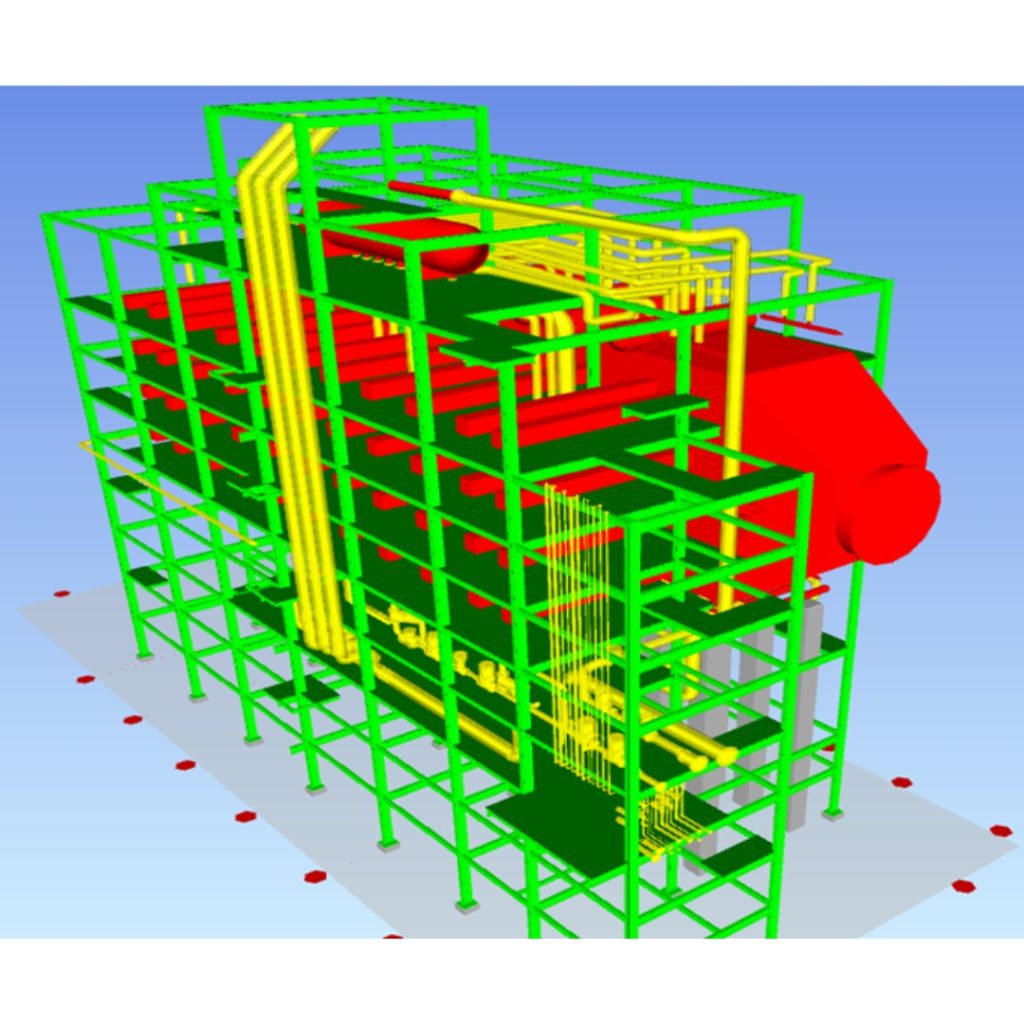
Our scope of work for power plant onshore projects includes piping detailed engineering for boiler piping, PDMS 3D modelling, and pipe stress analysis to ensure system reliability. We deliver piping layouts, isometric drawings with MTO, pipe support detail drawings with MTO, insulation detail drawings, auxiliary foundation load data, and piping stress reports. By integrating advanced engineering tools and best practices, we enhance plant safety, optimize material usage, and streamline installation, ensuring efficient and long-lasting infrastructure.
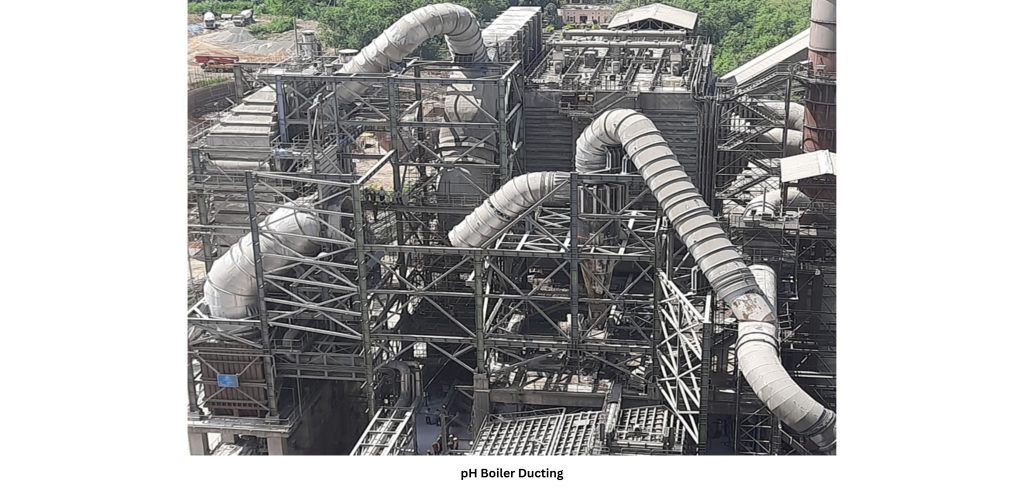
WHRB + Captive Power Plant (Cement Plant)
For WHRB and captive power plants in cement facilities, our scope includes piping detailed engineering for two boilers, rack area piping, turbine area piping, and balance of plant piping. We conduct stress analysis for critical piping to ensure reliability under operational conditions. Key deliverables include piping layouts, isometric drawings with MTO, pipe support detail drawings with MTO, insulation detail drawings, auxiliary foundation load data, and piping stress reports. Our expertise ensures optimized design, structural integrity, and efficient execution for long-term plant performance.

LACT Metering Skid
Our scope for LACT metering skid projects includes skid piping layout, piping GADs, isometrics, and pipe support drawings to ensure seamless integration. We conduct pipe stress analysis to assess operational loads and design a robust base frame for structural stability. Additionally, we perform transportation analysis to ensure safe and efficient skid movement. Our detailed engineering enhances reliability, safety, and ease of installation, optimizing performance in metering applications.

Piping layout Example

Piping Isometric Example

Snapshots of Project Executed
The Boiler Recirculation Drain Cooler (BLR RDC) is a key component in industrial boiler systems, ensuring the safe handling of high-temperature fluids. By cooling the drain flow before it reaches the discharge system, it prevents thermal stress, pipe damage, and potential leaks. The design of BLR RDC piping includes considerations for pressure fluctuations, material strength, and corrosion resistance. Regular maintenance of the system, including cleaning, monitoring temperature variations, and checking for blockages, is crucial to maintaining optimal boiler performance, preventing system failures, and extending the lifespan of both the cooler and associated piping.


Proper material selection for BLR RDC piping is essential to withstand high temperatures and pressure variations. Stainless steel or alloy piping is commonly used to resist corrosion and prolong system life. Adequate insulation and support structures prevent thermal expansion issues, ensuring system stability. Regular maintenance, including monitoring drain flow rates and inspecting for blockages, is necessary to prevent operational disruptions. A well-maintained BLR RDC system extends the life of piping networks and improves overall efficiency in industrial and power plant applications.
In piping systems, a Thermic Fluid Heater Recirculation Drain Cooler (TFH RDC) plays a vital role in managing drain flows from thermic fluid heaters. It ensures controlled cooling of high-temperature thermal fluids before discharge, preventing overheating and thermal shock in downstream piping. By reducing stress on pipes and minimizing the risk of scaling or corrosion, it enhances system reliability and efficiency. Proper design and maintenance of the TFH RDC optimize fluid handling, improve heat recovery, and protect piping networks in industrial heating applications. Regular monitoring prevents blockages and ensures smooth operation, extending the lifespan of both the heater and piping system.


In piping systems, the Turbine Inlet Piping System plays a critical role in delivering high-pressure steam or gas efficiently to the turbine. Properly designed inlet piping ensures smooth flow, minimizes pressure drops, and prevents thermal stress on components. Expansion joints, steam strainers, and pressure control valves are essential to handle fluctuations and maintain stability. Poorly maintained inlet piping can lead to vibration, erosion, or steam hammer, affecting turbine performance. Proper insulation and drainage systems prevent condensation buildup, protecting the turbine blades. Regular inspection and maintenance of turbine inlet piping are crucial for ensuring efficiency, safety, and long-term reliability.
In piping systems, the High-Pressure Pump Discharge Piping is crucial for efficiently transporting pressurized fluids to downstream equipment. Proper design ensures minimal pressure loss, prevents vibration, and protects against water hammer effects. Reinforced piping, expansion joints, and pulsation dampeners help manage flow stability and system integrity. Inadequate discharge piping can lead to cavitation, fatigue failure, or pressure surges, affecting pump performance. Proper supports and alignment reduce mechanical stress, enhancing longevity. Regular inspection for leaks, pressure fluctuations, and thermal expansion is essential to maintain efficiency and safety. A well-maintained discharge piping system ensures reliable operation in high-pressure applications.

In piping systems, Skid Piping is essential for integrating pumps, valves, heat exchangers, and instrumentation into a compact, modular unit. Proper design ensures efficient flow, minimal pressure drop, and structural stability under operating conditions. High-quality fabrication, precise alignment, and flexible connections help manage thermal expansion and vibration. Poorly designed skid piping can lead to leaks, misalignment, and system inefficiencies. Support structures and stress analysis are crucial to maintaining integrity under dynamic loads. Regular inspection and maintenance ensure reliable operation, reducing downtime. Well-engineered skid piping enhances system performance, simplifies installation, and optimizes space utilization in industrial applications.

The Importance of Piping Analysis in Engineering
Piping systems are exposed to various operational and environmental loads, including:
- Internal Pressure: Ensuring pipes withstand high-pressure conditions without failure.
- Thermal Expansion & Contraction: Evaluating the effects of temperature changes on structural stability.
- Vibration & Fatigue: Analysing cyclic loading conditions to prevent long-term damage.
- External Loads & Support Reactions: Assessing forces from support structures, seismic activity, and wind loads.
Traditional design approaches often rely on empirical formulas and standards (ASME B31.1, B31.3, ISO 14692, etc.), but CAE tools provide a more in-depth understanding of real-world performance.
Top Challenges in Piping System Engineering and Their Practical Solutions
1. Inaccurate Piping Layouts Leading to Space Conflicts
Description: Poorly planned piping layouts often result in equipment clashes, restricted access for maintenance, and inefficient use of space. These issues can lead to costly rework during installation.
Solution: Utilize 3D modelling tools like AutoCAD, AVEVA, and PDS for accurate layout design, clash detection, and space optimization.
2. Failure Due to Improper Stress Handling
Description: Thermal expansion, internal pressure, seismic events, and wind loads can impose excessive stress on piping systems. If unaddressed, these can cause deformation, leaks, or catastrophic failures.
Solution: Conduct detailed stress analysis using CAESAR II, Rohr2, or Auto PIPE. Incorporate supports, anchors, and expansion joints based on simulation results.
3. Material Degradation from High Temperatures or Corrosive Environments
Description: In chemical plants and power stations, pipes often carry high-temperature or corrosive fluids, accelerating material wear and shortening service life.
Solution: Select high-grade materials like stainless steel or specialized alloys. Ensure insulation and protective coatings are part of the design.
4. Poor Integration with Existing Infrastructure in Brownfield Projects
Description: Upgrading older plants presents challenges such as undocumented modifications and tight spatial constraints, increasing the risk of design mismatches.
Solution: Use detailed site surveys and laser scanning to create accurate as-built models. Design retrofits in 3D to integrate smoothly with existing infrastructure.
5. Incomplete or Ambiguous Engineering Documentation
Description: Missing or unclear documents during the project lifecycle can cause confusion, delays, and errors across design, procurement, and construction phases.
Solution: Develop a complete documentation package including design basis, line lists, GADs, isometrics, BOMs, and specification sheets for all phases.
6. Structural Instability of Pipe Supports
Description: Improperly designed supports may fail under load, leading to pipe sagging, vibration, or total system failure. This is especially critical for large-diameter or elevated pipes.
Solution: Perform structural analysis using CAE tools to assess load-bearing capacity. Create custom support drawings with BOM and ensure compliance with seismic and wind codes.
7. Maintenance Challenges Due to Inaccessible Piping
Description: If access to valves, joints, or critical instruments is restricted, it increases downtime and labour costs during routine maintenance or repairs.
Solution: Design layouts with accessibility in mind. Use modular skid-based piping where feasible and produce detailed as-built documents to assist future maintenance.
8. Vibration and Fatigue Failures in High-Pressure Systems
Description: Pumps and compressors often cause vibrations. If these are not properly managed, they can lead to fatigue cracking or joint failures over time.
Solution: Perform vibration and dynamic stress analysis. Include expansion loops, dampeners, and proper support placement in design.
9. Errors During Fabrication Due to Lack of Detailing
Description: Fabrication shops rely on detailed drawings. Missing or ambiguous weld symbols, dimensions, or BOMs can cause delays and incorrect builds.
Solution: Provide high-precision isometric drawings, weld maps, and complete BOMs. Include notes for critical tolerances and installation guidelines.
10. Cost Overruns Due to Inefficient Design and Material Use
Description: Overdesign and poor material planning can inflate costs and extend timelines. This often results from lack of simulation-based optimization.
Solution: Use FEA and stress analysis to optimize material use. Conduct technical bid analysis and vendor reviews to ensure cost-effective procurement.
Why Choose Analyzer CAE Solutions?
At Analyzer CAE Solutions, we provide end-to-end piping engineering services with precision, efficiency, and compliance. Our expertise in piping layout design, 3D modelling, stress analysis, and detailing ensures that your piping systems are optimized for performance, safety, and cost-effectiveness.
1. Expertise in Piping Layout & Design
✔ Optimized space planning & routing for efficient layouts.
✔ Strategic equipment placement & pipe routing for smooth operation.
✔ Full compliance with ASME, ISO, API, and other industry standards.
2. Advanced 3D Modelling for Accuracy
✔ Utilization of cutting-edge tools like AutoCAD, AVEVA, and PDS.
✔ Clash detection & interference checks to prevent costly errors.
✔ Realistic visualization for seamless execution.
3. High-Precision Stress Analysis
✔ Simulation of operating conditions (pressure, temperature, external forces).
✔ Thermal, pressure, and mechanical stress evaluation for long-term reliability.
✔ Optimized pipe supports, expansion joints, and anchoring solutions.
4. Detailed Piping Documentation
✔ Spool & isometric drawings for accurate fabrication.
✔ Bill of Materials (BOM) generation to streamline procurement.
✔ Welding & fabrication detailing to ensure seamless construction.
5. Reliability, Compliance & Cost Efficiency
✔ Minimized downtime & failures through robust analysis.
✔ Optimized material usage for cost savings.
✔ Industry-proven track record of successful implementations.
Global Reach, Local Expertise in CFD & FEA Services
Analyzer CAE Solutions has built a strong reputation for delivering high-quality CFD services and FEA services to clients across engineering-driven markets such as the USA, Saudi Arabia, UAE, and Germany. These regions are known for large-scale projects in oil & gas, power, and industrial infrastructure, where advanced simulation and design accuracy are critical. Our global experience enables us to align with international standards and provide tailored engineering solutions that enhance system reliability, safety, and performance—no matter the region. We are equipped to support clients worldwide with scalable, precise, and innovative CAE solutions.
By choosing Analyzer CAE Solutions, you gain access to a team of industry experts dedicated to delivering efficient, compliant, and innovative piping solutions that enhance performance while reducing operational risks.