

Thermal Optimization of a High-Power EV Charger Using CFD Analysis
August 12, 2025
Predictive Erosion Analysis in Flow Adapter Nozzles : Nozzle Erosion CFD Analysis
September 5, 2025Exhaust Vent Stack Dispersion: How CFD Protects Air Quality and Safety
Technical insight from Analyzer CAE Solutions covering engineering simulation, design validation and practical CAE applications for industrial decision-making.
Introduction
Industrial facilities generate exhaust gases that must be released into the atmosphere safely. Exhaust Vent stacks are engineered for this purpose, but without proper design validation, emissions could create unsafe zones around the plant. Computational Fluid Dynamics (CFD) provides a powerful way to analyse and optimize these systems before problems arise.
Why Exhaust Vent Dispersion Matters
Exhaust gases like carbon dioxide (CO₂), hydrogen sulphide (H₂S), and ammonia (NH₃) are common in many industries. Even at low levels, these gases can pose health risks to workers and affect surrounding communities. Traditional stack design relies on height and flow assumptions, but these don’t always account for complex wind patterns and nearby structures.
CFD fills this gap by providing a detailed simulation of how gases travel and dilute in real-world conditions.

The Role of CFD in Exhaust Vent Stack Design
CFD allows engineers to virtually test different scenarios before making costly design changes. By inputting stack geometry, gas flow rates, wind speeds, and ambient conditions, engineers can accurately predict:
- The velocity profile of exhaust gases as they exit the stack.
- How different gas species disperse in the atmosphere.
Whether emissions remain within safe concentration limits at ground level.

Key Insights from a Recent CFD Study
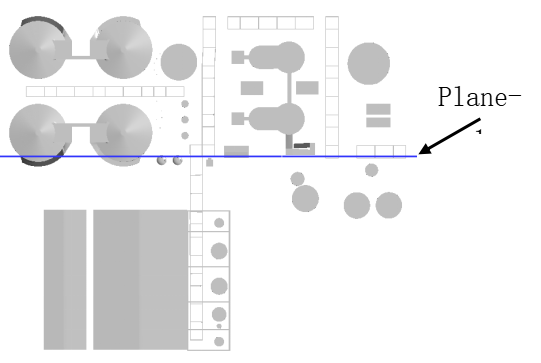
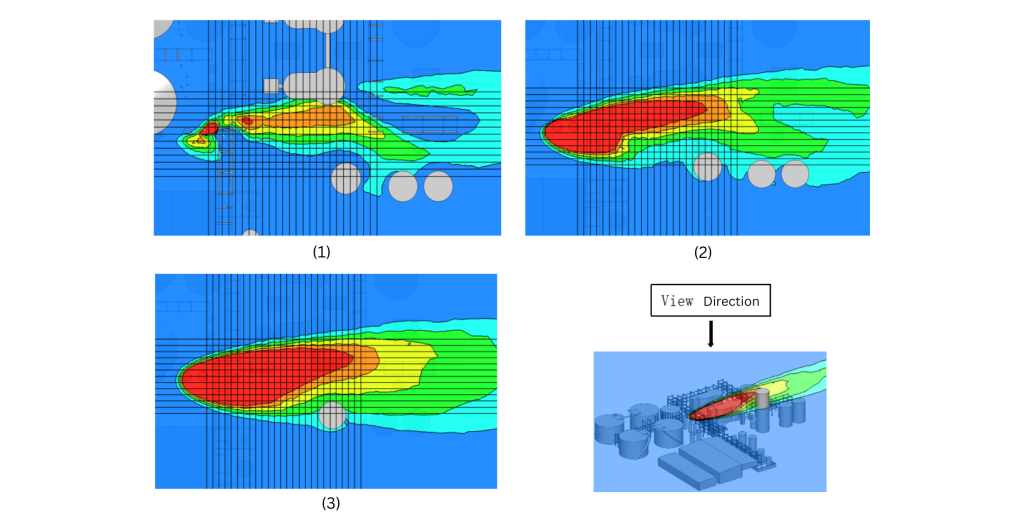
A CFD analysis was conducted for an industrial client to evaluate dispersion from a vent stack.
- Enhanced Mixing: The exhaust gases accelerated upon leaving the stack, quickly mixing with surrounding air.
- Safe Concentrations: Potentially harmful species dropped to trace levels shortly after dispersion.
Limited Cloud Extent: The gas cloud dissipated within a short distance, minimizing ground-level risks.
Why This Matters for Industry
The benefits of CFD dispersion analysis extend beyond compliance:
- Worker Safety: Ensures staff are not exposed to harmful concentrations.
- Environmental Responsibility: Demonstrates commitment to cleaner air and sustainable operations.
- Regulatory Compliance: Provides evidence for meeting air quality standards.
Design Confidence: Validates vent stack sizing, placement, and orientation before construction.
Future of Vent Stack Analysis
As industries move toward more sustainable operations, predictive simulations like CFD are becoming essential. They allow companies to:
- Explore “what-if” scenarios (different wind speeds, temperatures, or stack heights).
- Optimize stack designs for both performance and cost efficiency.
- Build community trust by ensuring emissions are always under control.
Conclusion
Exhaust vent stack dispersion is more than a technical design challenge it’s a matter of safety, compliance, and responsibility. CFD analysis provides the clarity industries need to operate confidently, ensuring gases are dispersed safely into the atmosphere without impacting workers or nearby communities.
By investing in CFD-based dispersion studies, industries can safeguard people, protect the environment, and meet the highest standards of industrial air quality.