
CFD Analysis of Exhaust Vent Stack Dispersion

Optimizing Ventilation in Enclosed Spaces Using CFD
March 31, 2025
Optimizing Airflow in High-Rise Buildings: A CFD Analysis for Efficient Ventilation – Analyzer CAE Solutions
April 11, 2025

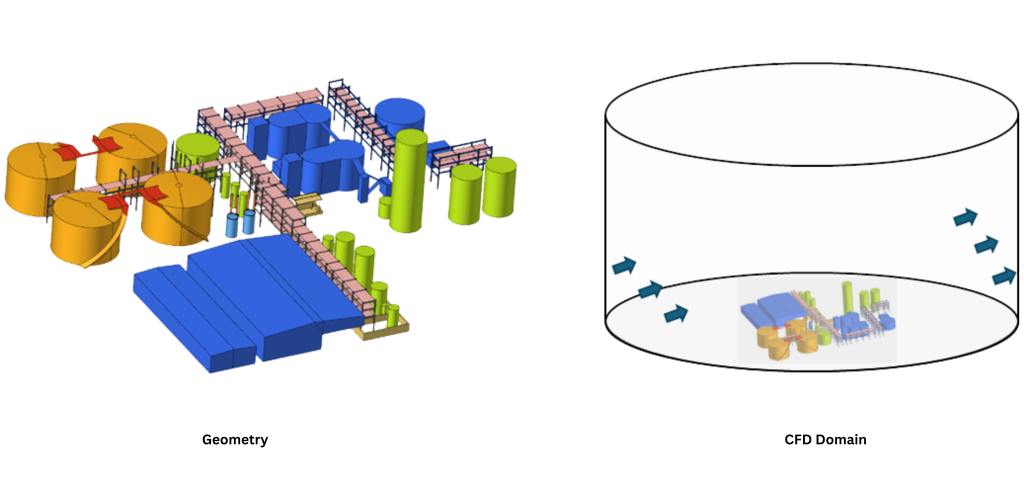
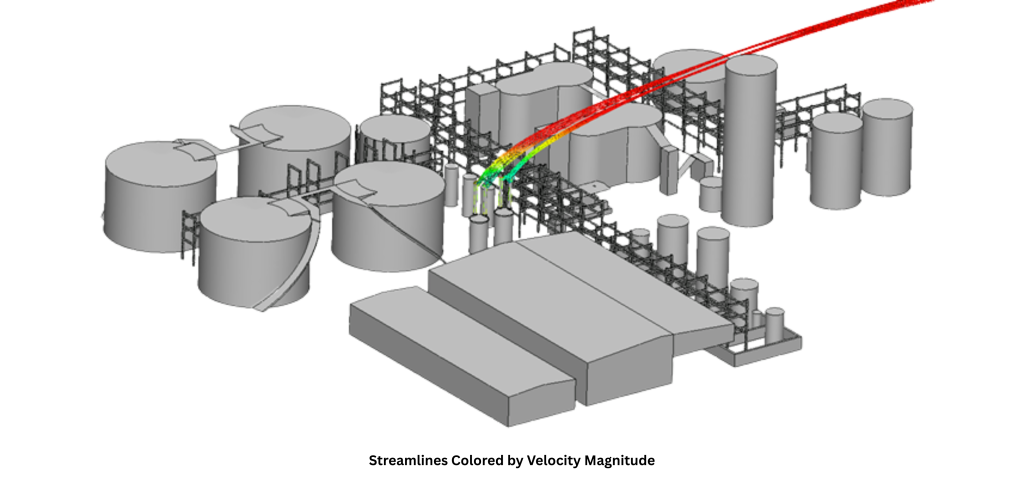
The study focused on analysing the dispersion of exhaust gases released from a vent stack, assessing velocity distribution, pollutant spread, and overall flow behaviour. The primary objective was to evaluate how gases mix with the surrounding environment under specific atmospheric conditions. Key aspects examined included flow characteristics within the vent stack, the interaction between exhaust gases and ambient air, and pollutant dispersion at various heights.
The analysis considered a steady-state approach with multiple gas species involved. A uniform flow profile was assumed at the inlet, and turbulence effects were incorporated to simulate real-world conditions. The vent stack was analysed within a large domain to capture the full extent of dispersion. To ensure accuracy, external walls were modelled with thermal constraints, and wind influence was included to study its role in pollutant transport.
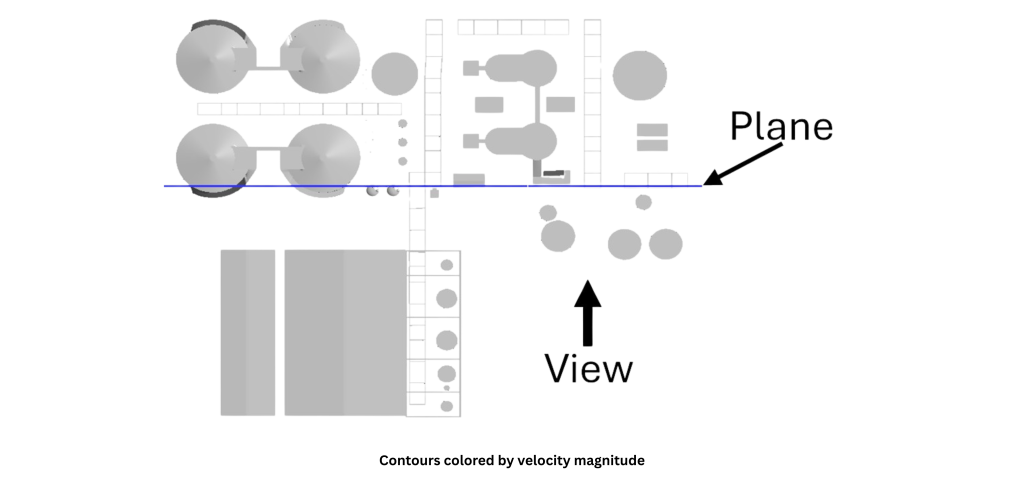
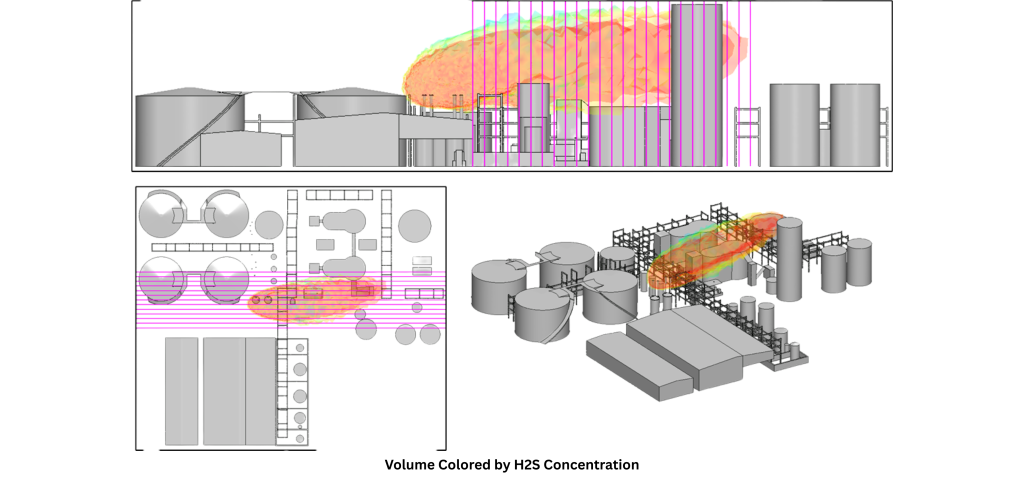
Results indicated that dispersion patterns were largely dependent on wind direction and speed. As the gases exited the stack, they mixed with the ambient air, leading to changes in velocity and concentration levels. Contour maps showed the spread of different gas species at various heights, illustrating how pollutants dissipate over distance. The study found that heavier gases tended to remain closer to the source, while lighter components dispersed more rapidly.
Overall, the analysis provided valuable insights into the behaviour of exhaust gases and their potential environmental impact. The findings can be used to optimize vent stack design, improve emission control strategies, and ensure compliance with air quality standards.




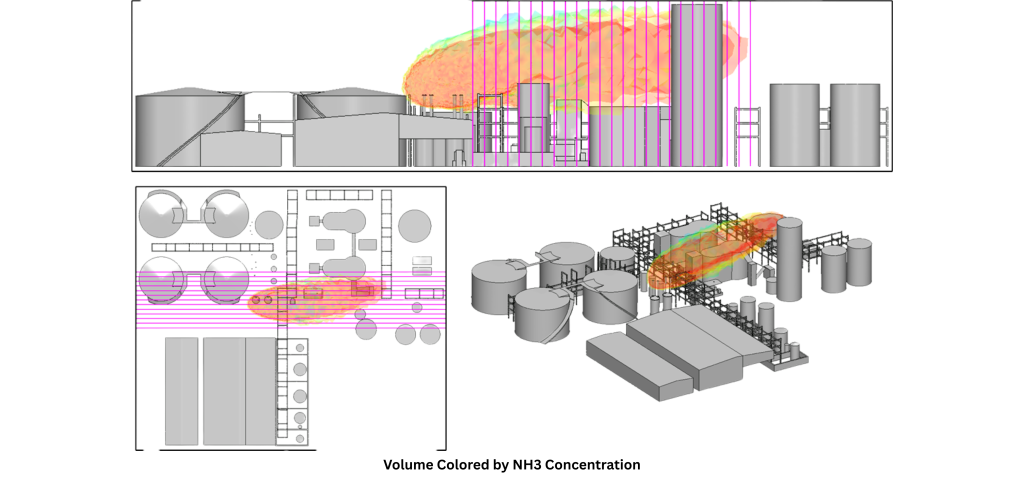
Key Observations
The results demonstrated that wind direction and speed are critical in shaping the dispersion patterns. Pollutants were seen to spread over defined cloud-like regions, with heavier gases remaining closer to the source and lighter gases dispersing more widely. These insights are invaluable for optimizing vent stack designs to ensure that pollutants are efficiently dispersed, thereby minimizing the risk of high concentration zones that could impact air quality.
Moving Forward
By integrating such detailed dispersion analyses into the design and operation of industrial facilities, engineers and environmental specialists can develop more effective emission control strategies. This proactive approach not only safeguards public health but also supports sustainable industrial growth.
Stay tuned as we delve further into innovative methods for managing industrial emissions and explore future trends in environmental engineering.
Why Choose Analyzer CAE Solutions?
At Analyzer CAE Solutions, we specialize in solving complex engineering challenges through advanced computational analysis. Our expertise in fluid dynamics, gas dispersion, and industrial process optimization enables us to provide clear, actionable insights for improving efficiency, safety, and performance. We work closely with clients to deliver tailored, high-quality solutions that address immediate challenges while ensuring long-term operational success.
What Sets Us Apart?
- Unmatched Expertise & Experience
- Customized, Client-Focused Solutions
- Commitment to Quality & Transparency
- Continuous Innovation & Advancement
By choosing Analyzer CAE Solutions, you partner with a trusted leader in CFD and engineering analysis, committed to delivering excellence, innovation, and sustainable solutions. Let us help you achieve greater efficiency, safety, and compliance in your engineering projects.