
The Role of Steel Structures in Modern Engineering – FEA Analysis

Enhancing Efficiency & Reliability in Piping Systems
April 17, 2025
Finite Element Analysis (FEA) in Vibration Analysis: An In-Depth Guide
April 23, 2025
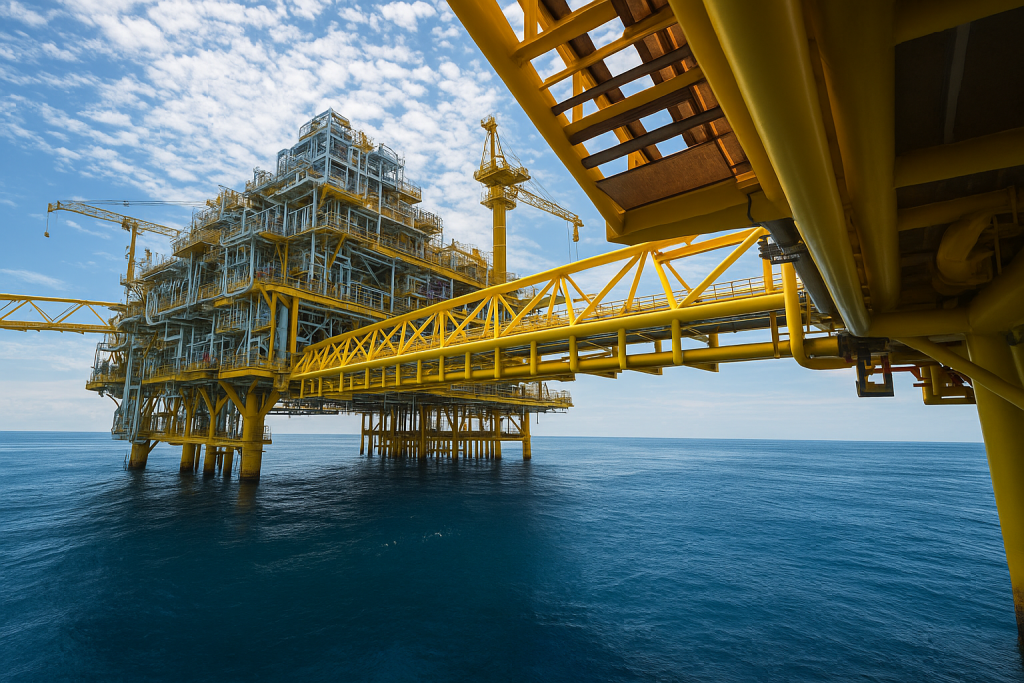
Steel structures are vital in modern industrial, commercial, and infrastructure projects, offering strength, durability, and adaptability for various engineering applications. The process begins with Design & Planning, where engineers assess project requirements, including load demands, environmental conditions, and material selection. This phase ensures stability, safety, and long-term efficiency, providing the foundation for the project. Engineers collaborate to define the scope, develop the initial design, and choose materials suited for the structure’s needs.
Following planning, Detailing & Modelling involves creating detailed 2D and 3D models using advanced design software like Tekla and AutoCAD. These models are digital representations of the structure, highlighting every component and specification. This stage helps identify potential issues early, such as clashes between elements, while optimizing the design. With tools like Tekla and AutoCAD, engineers can visualize the entire structure, enhancing precision and minimizing errors before proceeding to production.
Ensure reliability, FEA & Structural Analysis are performed using STAAD Pro and other software tools. Finite Element Analysis simulates how the structure will behave under various loads, stresses, and environmental conditions. This analysis helps identify weak points and predict failures, evaluating stress distribution, deflections, and overall performance. FEA optimizes the design for safety, strength, and cost-efficiency, ensuring performance under extreme conditions like high winds, heavy loads, or seismic activity.
Why Steel Structures?
Steel offers several advantages that make it an essential material in structural engineering. One of its key benefits is its high strength-to-weight ratio, allowing structures to support significant loads while remaining relatively lightweight. This efficiency enables engineers to design large and complex buildings without excessive material usage. Additionally, steel’s durability ensures that structures can withstand environmental challenges such as corrosion, fire, and extreme temperatures when treated with protective coatings.
Another important advantage is design flexibility. Steel structures can be fabricated into a variety of shapes and sizes, accommodating both functional and aesthetic architectural needs. The prefabrication of steel components further enhances cost-effectiveness, reducing construction time and labour costs. Additionally, steel is a sustainable material, with high recyclability and minimal waste production, making it an environmentally responsible choice for modern infrastructure projects.
Types of Steel Structures
Steel is widely used in various industries, contributing to the development of complex infrastructures. Some of the most common steel structures include:
- Industrial and Commercial Structures – Used for manufacturing facilities, warehouses, and office buildings, providing open layouts and durability.
- Bridges and Transportation Infrastructure – Steel is a key material in bridge construction, ensuring structural integrity under dynamic loads and environmental exposure.
- High-Rise Buildings – Steel frameworks enable skyscrapers to withstand wind loads and seismic activity while maintaining design flexibility.
- Modular and Prefabricated Structures – Prefabricated steel components allow for faster assembly and reduced on-site labour.
- Offshore and Marine Structures – Used in oil rigs, shipyards, and coastal facilities, steel structures must endure harsh marine environments.
- Safety-Critical Structures – Steel is also used in specialized buildings designed to resist blasts, earthquakes, and high-pressure conditions.
Structural Analysis & Design
Ensuring the safety and longevity of steel structures requires advanced analysis and design methodologies. Engineers use computational tools and simulations to evaluate various factors that affect structural performance, such as:
- Finite Element Analysis (FEA) – A key aspect of FEA & Structural Analysis, assessing stress distribution, load resistance, and failure points.
- Seismic & Dynamic Analysis – Incorporated during Design & Planning to enhance stability against earthquakes and dynamic forces.
- Blast & Impact Analysis – Addressed in Detailing & Modelling to ensure structures withstand high-risk conditions like explosions and collisions.
- Fatigue & Load Analysis – A crucial component of FEA & Structural Analysis, evaluating long-term operational durability under fluctuating forces.
- Lifting & Transportation Studies – Integrated during Detailing & Modelling to guarantee the safe handling and installation of large structural components.
To ensure structural reliability, engineers follow industry standards throughout all phases:
- Global Steel Design Codes – Applied during Design & Planning to ensure structural integrity and material selection.
- Safety & Environmental Regulations – Incorporated in Detailing & Modelling for compliance with construction laws.
- Sustainability Standards – Evaluated through FEA & Structural Analysis to promote eco-friendly and energy-efficient designs.
Below are some examples of steel structures successfully designed and analysed by Analyzer CAE Solutions Pvt. Ltd and its partners, demonstrating our expertise in delivering reliable, high-performance engineering solutions.
Seepage Water Treatment
In water treatment plants, the need for a strong and durable framework is essential to support various treatment processes. Steel structures are integral, providing high-strength frameworks for equipment, piping systems, and storage tanks. Through the Design & Planning phase, a solid foundation is laid, followed by Detailing & Modelling to ensure precision in the structural components. The use of FEA & Structural Analysis then guarantees that steel frameworks can withstand dynamic loads and harsh operational conditions, ensuring their reliability and long-term operational efficiency in water treatment facilities.
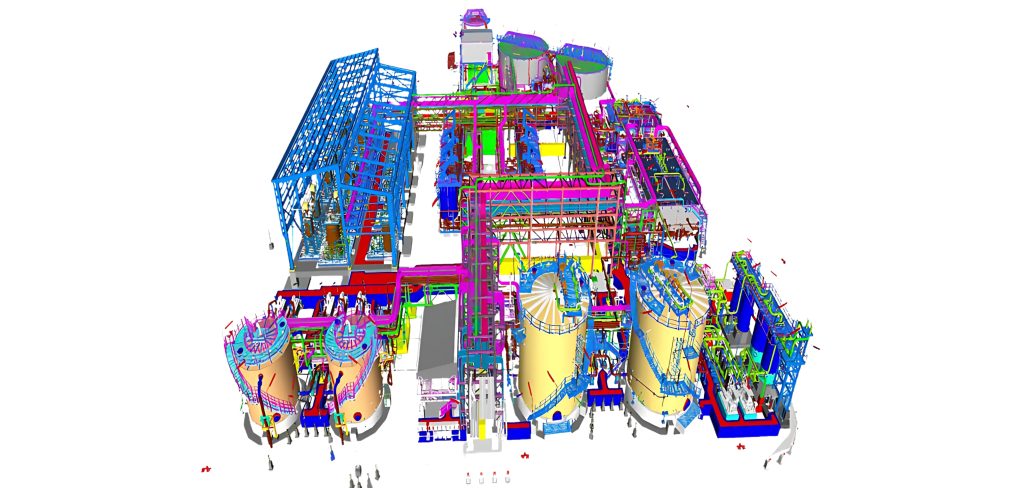
Plasma Enhanced Melter
A Plasma Enhanced Melter utilizes high-temperature plasma technology to efficiently break down and melt materials, playing a crucial role in waste treatment and metallurgical processes. Steel structures are vital, providing the required strength and thermal resistance to support these high-temperature operations. Through Design & Planning, the foundation is carefully developed, followed by Detailing & Modelling to ensure accurate structural components. FEA & Structural Analysis then ensures the steel framework can withstand thermal expansion, mechanical stress, and dynamic loads, optimizing operational safety and efficiency.
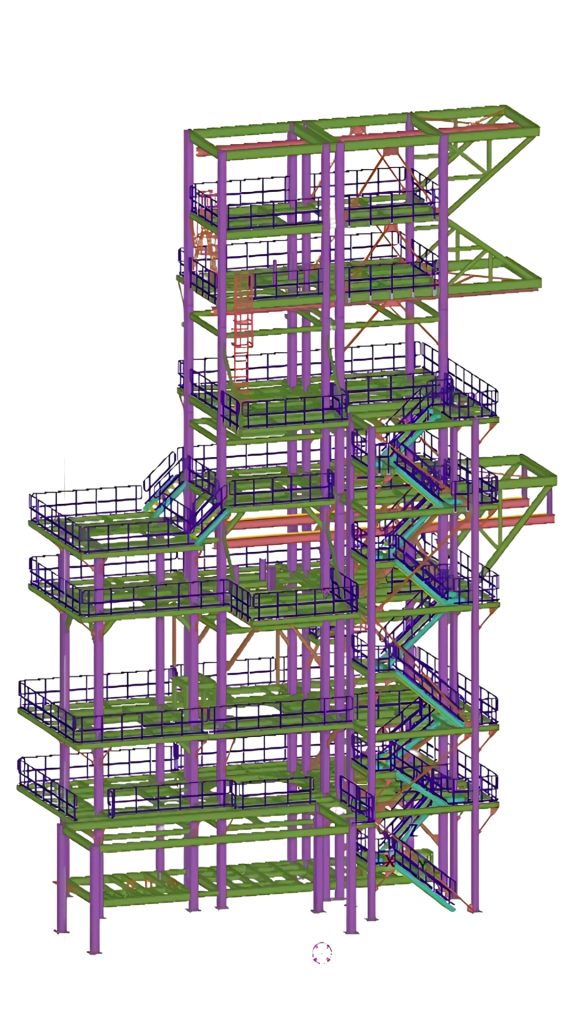
Knockout Drum Structure
A Knockout Drum Structure is an essential part of gas-liquid separation, particularly in the oil & gas and chemical industries. Steel frameworks are indispensable for providing the strength and stability needed to support the drum under fluctuating pressure and flow conditions. During Design & Planning, the structure is meticulously conceived, followed by Detailing & Modelling to refine the components for optimal performance. FEA & Structural Analysis then rigorously assess stress distribution, load-bearing capacity, and dynamic forces, ensuring the structure’s durability and reliability in the demanding environments of these industries.
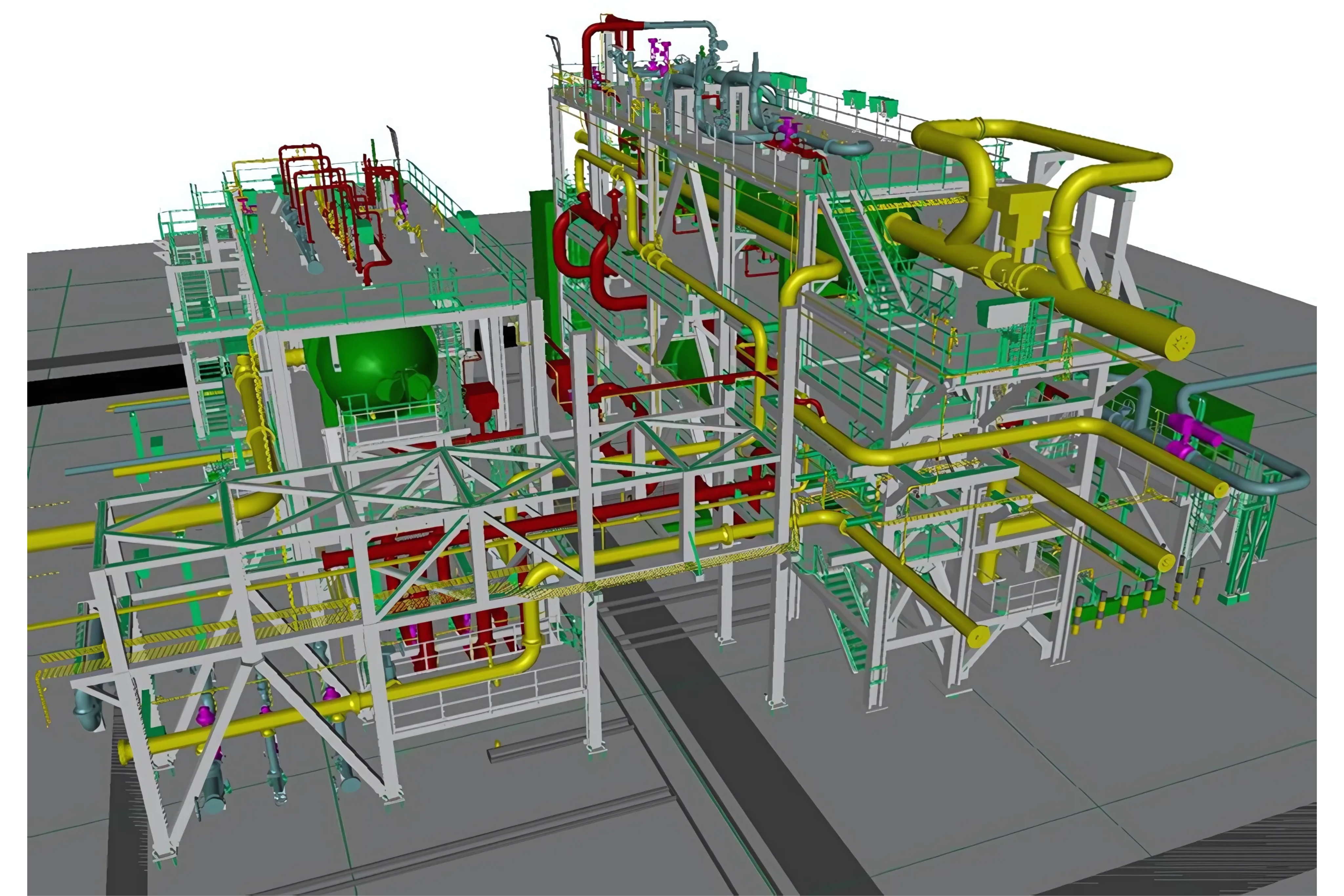
Distillation Unit
A Distillation Unit is a backbone of chemical and petrochemical industries, facilitating the precise separation of components based on boiling points. Steel frameworks form the structural core, providing unwavering support for columns, piping, and critical equipment while enduring extreme temperatures and pressure fluctuations. Through Design & Planning, the foundation is strategically developed, followed by Detailing & Modelling to refine every structural element. FEA & Structural Analysis then rigorously assess stress distribution, thermal expansion, and load-bearing capacity, ensuring a robust, safe, and efficient operation in demanding industrial settings.
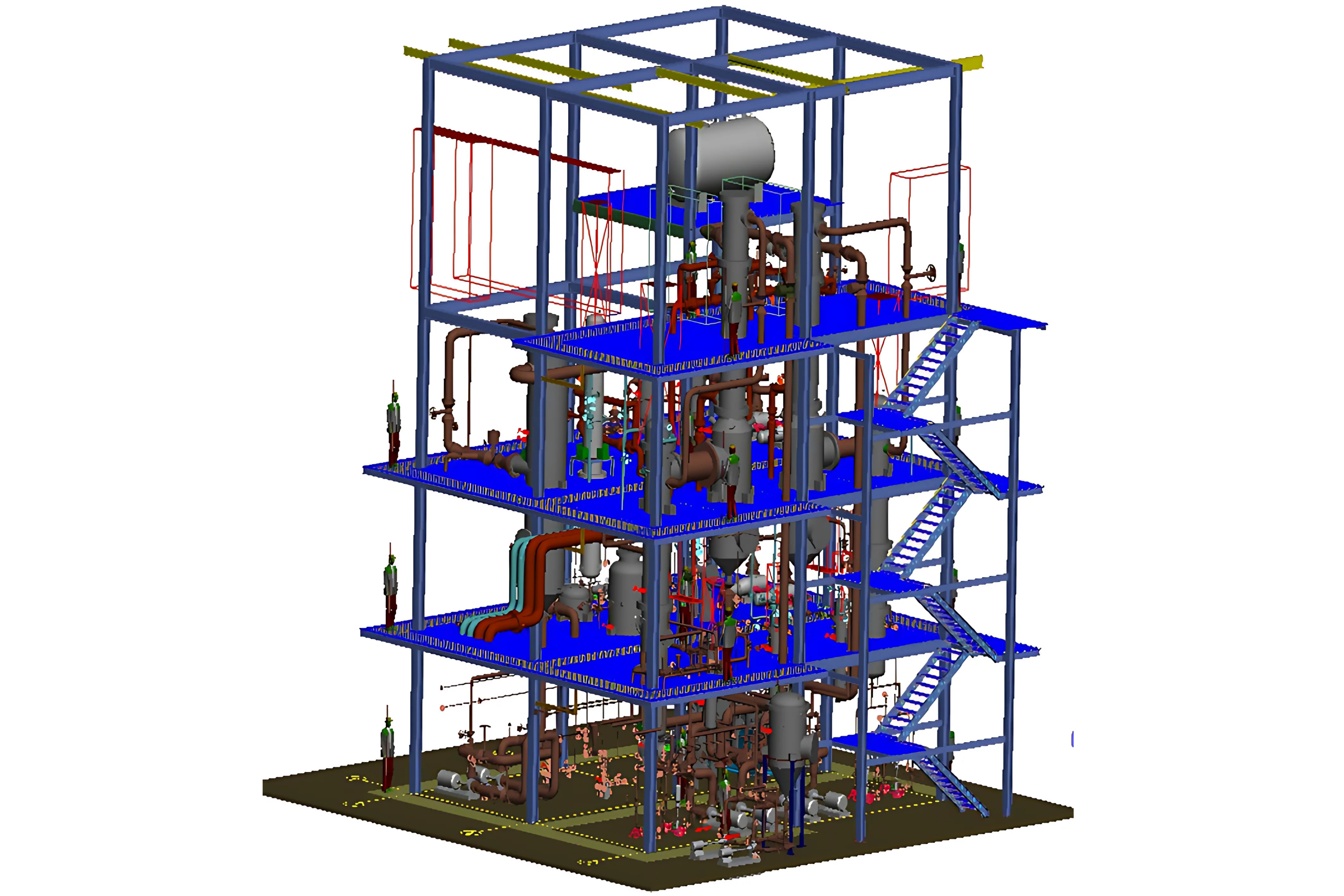
Hydrotreater Unit
A Hydrotreater Unit is a critical asset in refining, designed to remove contaminants like sulphur, nitrogen, and metals from petroleum streams. Its demanding operations require robust steel frameworks to support reactors, heat exchangers, and intricate piping networks, all while enduring extreme pressure and temperature variations. Design & Planning lays the groundwork for structural integrity, followed by Detailing & Modelling to fine-tune every component for precision. FEA & Structural Analysis then rigorously assess stress distribution, thermal effects, and overall stability, ensuring the unit operates safely and efficiently in high-intensity industrial environments.

Metal Refining Plant
A Metal Refining Plant is a critical facility for the extraction and purification of metals through thermal, chemical, or electrolytic processes. Steel structures provide essential support for high-temperature furnaces, heavy processing equipment, and material handling systems, ensuring stability and durability under extreme operational conditions. Through Design & Planning, a robust structural framework is established, followed by Detailing & Modelling to enhance precision and efficiency. FEA & Structural Analysis play a pivotal role in evaluating stress distribution, thermal expansion, and load-bearing capacity, ensuring structural integrity and operational reliability in demanding industrial environments
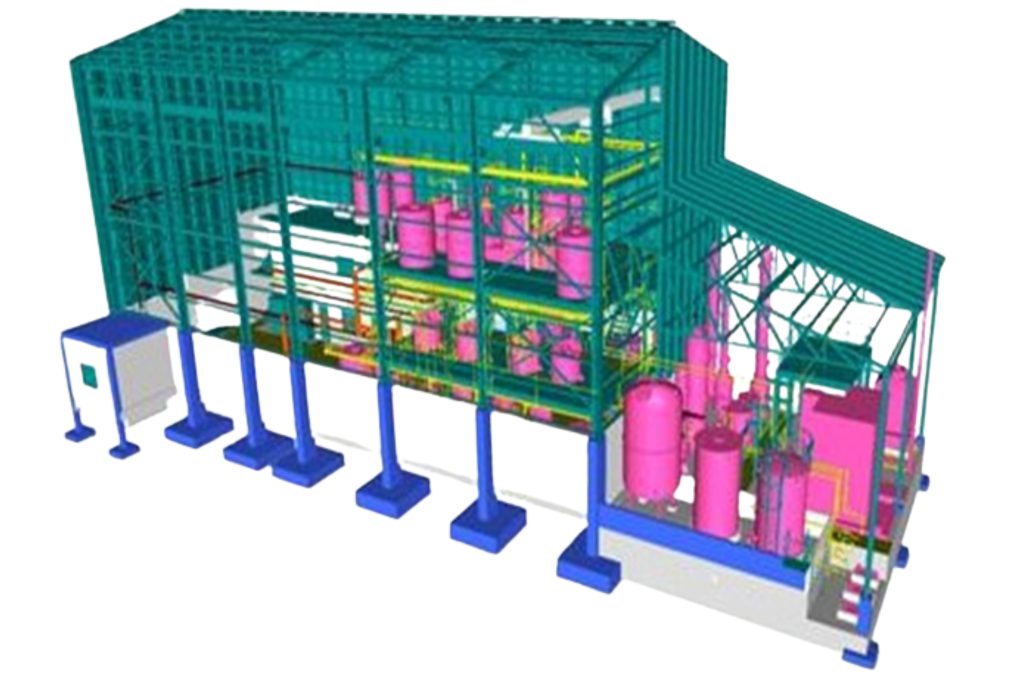
Dryer Plant
A Dryer Plant is a vital industrial facility engineered to effectively remove moisture from materials, ensuring optimal processing efficiency and product quality. Steel structures serve as the foundation, offering durability and support for drying units, ventilation systems, and heat exchangers. Design & Planning establishes a structurally sound framework, while Detailing & Modelling ensures precision in component integration. To reinforce safety and operational efficiency, FEA & Structural Analysis evaluate thermal effects, mechanical stress, and overall structural resilience, guaranteeing reliable and energy-efficient performance in demanding industrial conditions.
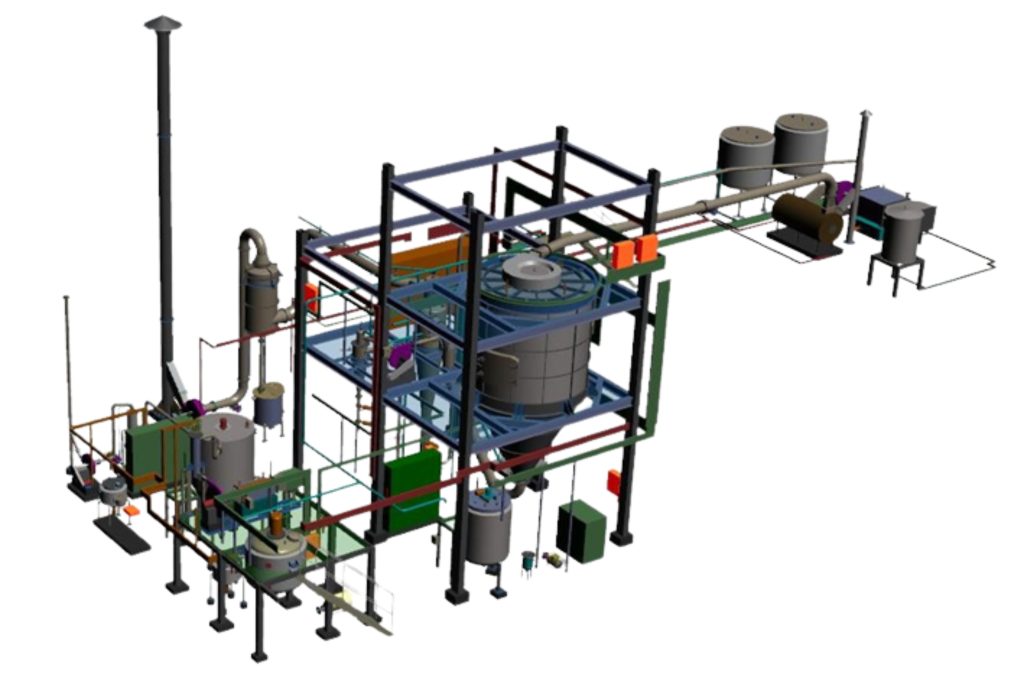
Produced Water Treatment Plant
A Produced Water Treatment Plant plays a crucial role in processing and purifying water generated from industrial operations, ensuring compliance with environmental and regulatory standards. The steel framework serves as a fundamental structural element, providing stability and support for filtration units, separation tanks, and treatment systems while enduring variable loads and chemical exposure. Through Design & Planning, a resilient foundation is developed, followed by Detailing & Modelling to refine structural components for optimal performance. Finite Element Analysis (FEA) & Structural Analysis are employed to evaluate load distribution, structural integrity, and durability, ensuring efficient and safe operation under demanding industrial conditions.
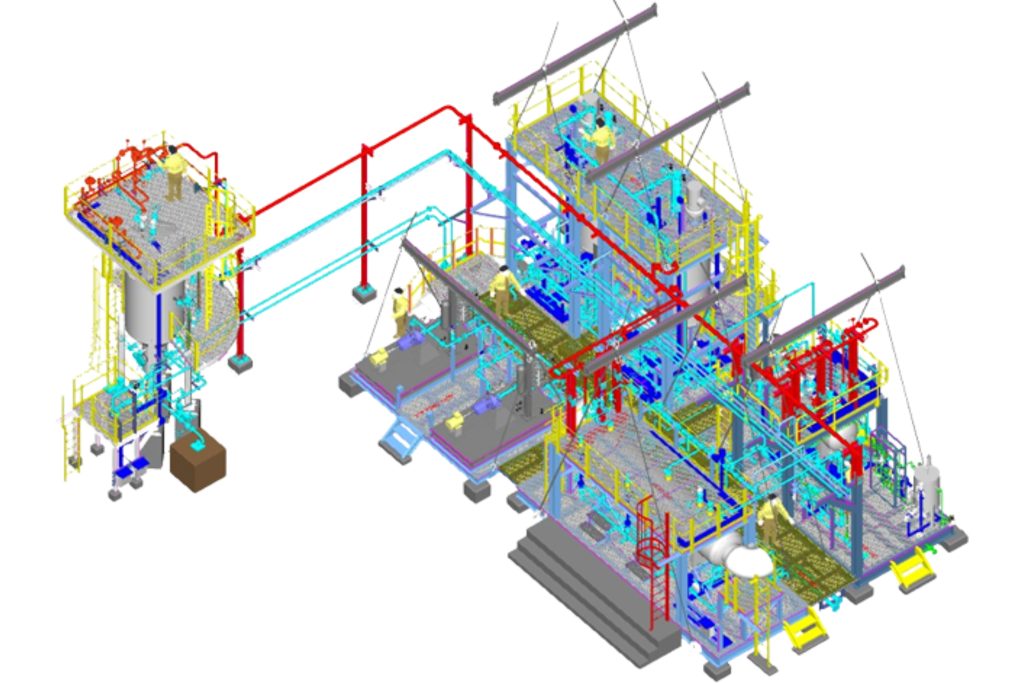
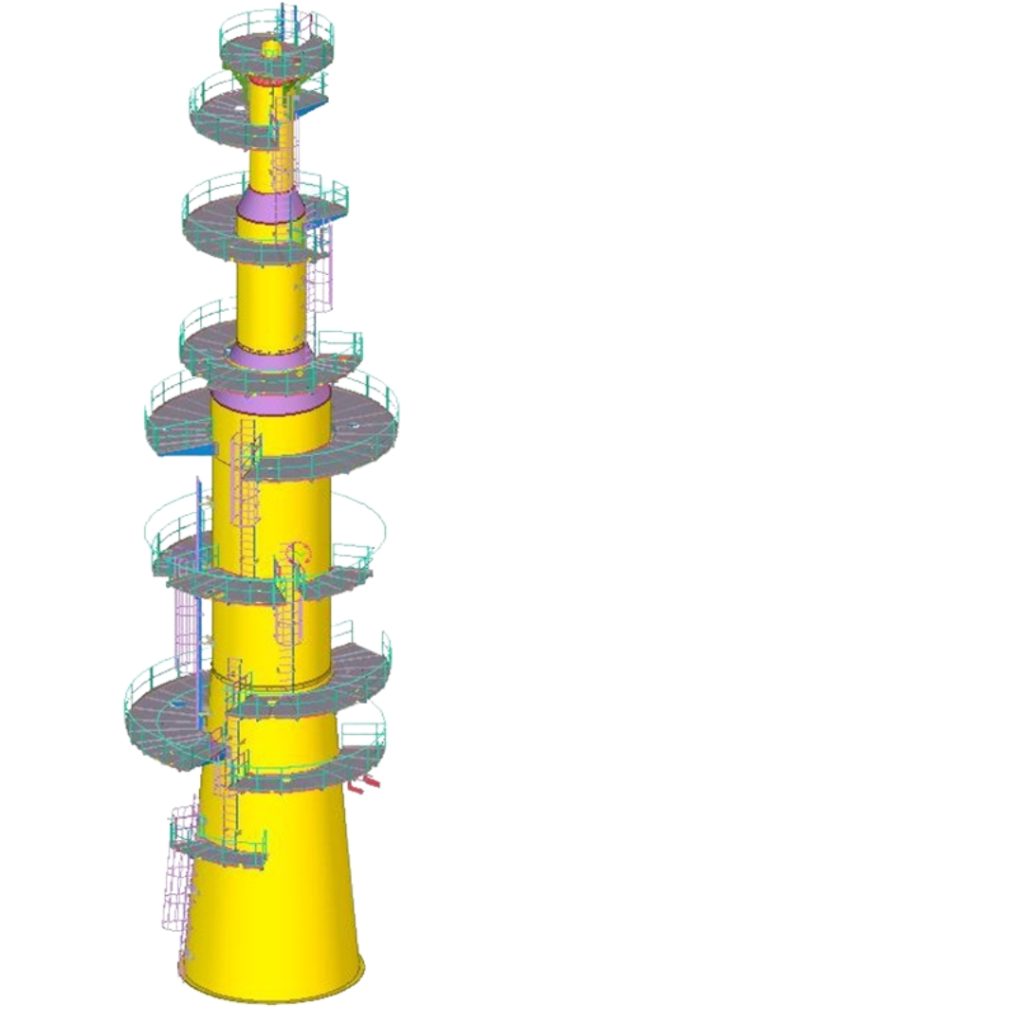
Circular Vessel Platforms
Circular Vessel Platforms are critical structural elements that facilitate safe and stable access around cylindrical tanks and process vessels in industrial settings. Engineered with high-strength steel, these platforms are designed to ensure durability, load-bearing capacity, and resistance to operational stresses. Design & Planning establishes a robust framework, followed by Detailing & Modelling to refine structural precision and efficiency. Enhance safety and performance, Finite Element Analysis (FEA) & Structural Analysis are conducted to assess structural integrity, optimize weight distribution, and ensure long-term reliability in demanding operational environments.
Oil Re-refining Plant
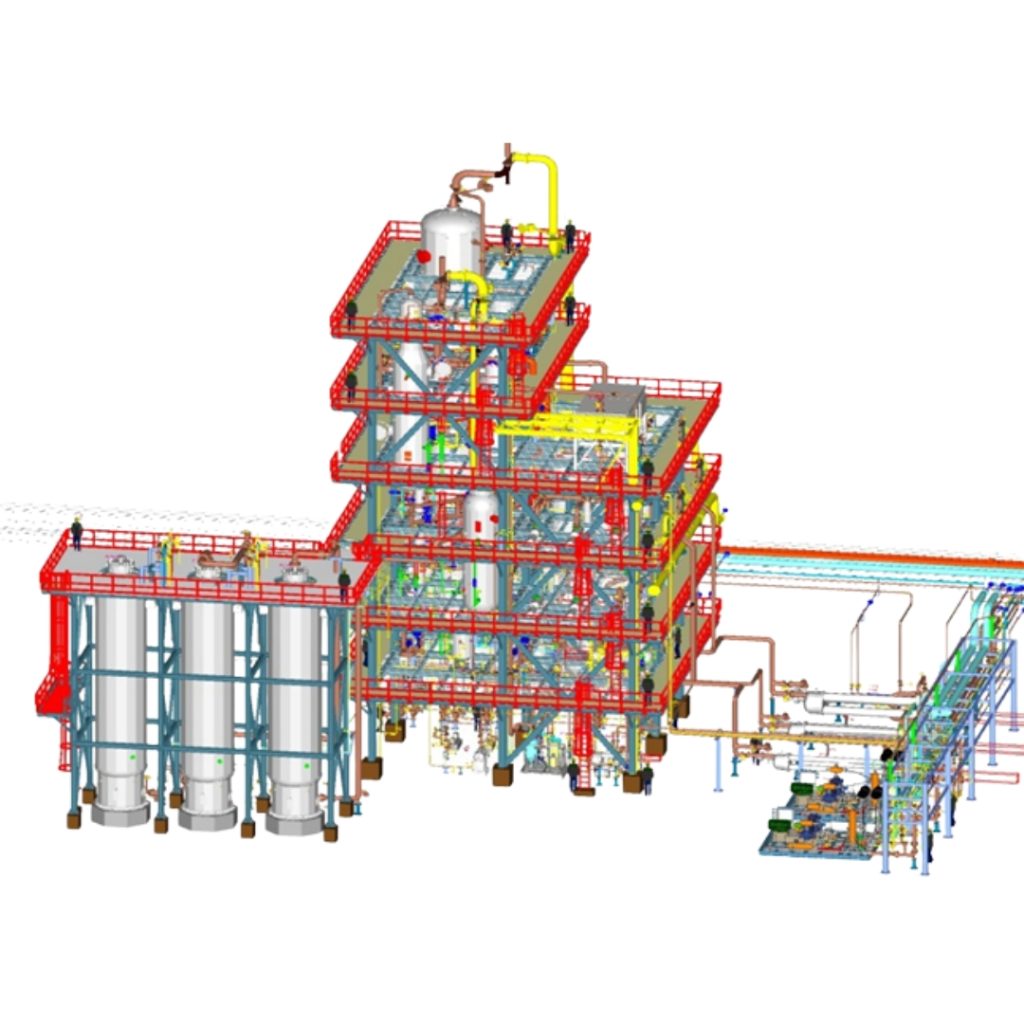
An Oil Re-refining Plant is a highly specialized facility dedicated to processing used lubricants and waste oils, restoring them to a reusable state while advancing sustainability and resource efficiency. Steel structures serve as the backbone of the facility, providing essential support for refining units, distillation columns, and filtration systems. Design & Planning establishes a structurally sound framework, followed by Detailing & Modelling to ensure precision in construction and component integration. Guarantee durability and operational safety, Finite Element Analysis & Structural Analysis are employed to assess performance under elevated temperatures and chemical exposure, ensuring long-term reliability in complex industrial environments.
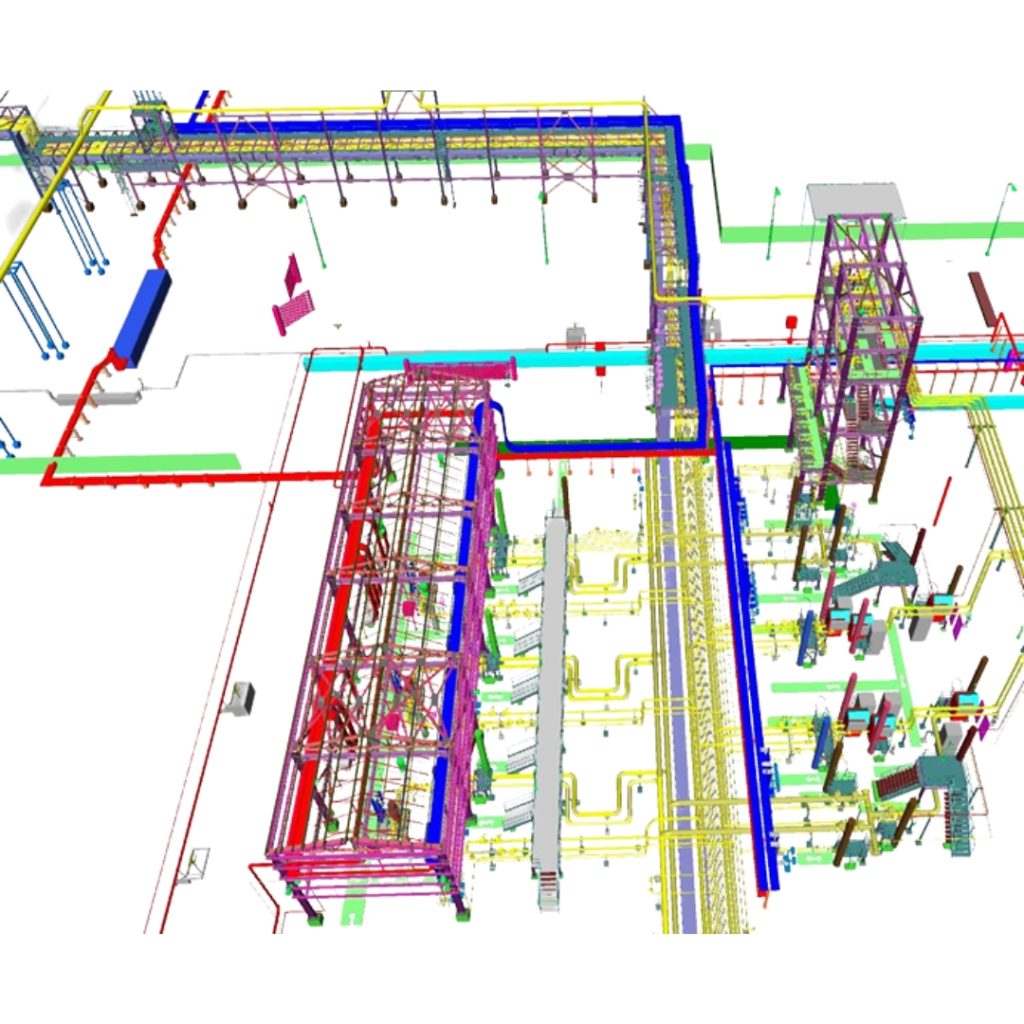
Gas Processing Plant
A Gas Processing Plant is integral to refining raw natural gas, removing impurities, separating valuable components, and ensuring compliance with industry standards. Steel frameworks provide the necessary structural stability to support compressors, separators, and treatment units, effectively withstanding high-pressure and temperature variations. Through Design & Planning, a resilient structural foundation is created, followed by Detailing & Modelling to refine individual components for optimal performance. Ensure operational safety and efficiency, Finite Element Analysis (FEA) & Structural Analysis are used to optimize load distribution, evaluate thermal expansion effects, and enhance overall plant safety, ensuring reliable and efficient gas processing operations.
Applications of Steel Structures
Steel structures are implemented in a wide range of engineering projects across industries. Some notable applications include:
- Industrial Manufacturing Plants – Supporting heavy machinery and high-load operations.
- Energy & Power Facilities – Used in power stations, wind farms, and substations requiring long-term structural stability.
- Aerospace & defence Structures – Providing secure frameworks for aircraft hangars and military installations.
- Urban Infrastructure – Essential for metro stations, stadiums, and public buildings requiring durability and flexibility.
- Coordination & Transportation Hubs – Supporting railways, airports, and port facilities that experience constant load changes.
Top Challenges in Steel Structure Engineering and Their Practical Solutions
Accurately Assessing Load Demands & Environmental Conditions
Description: Each steel structure project faces unique forces—wind, seismic activity, thermal loads, and dynamic operational forces. Misjudging these loads can compromise structural safety and functionality.
Solution: Use global design codes (AISC, Eurocode, IS, etc.), and perform seismic and dynamic analysis during planning. Simulate long-term exposure to fatigue and creep for durability assurance.
Selecting the Right Material for Performance & Longevity
Description: Incorrect material selection can lead to corrosion, structural failure, or reduced life span in harsh environments (e.g., marine, desert, or chemical zones).
Solution: Choose materials based on environmental conditions. Use galvanized or coated steel for corrosion resistance and follow international material grade standards.
Integrating Safety, Cost-Efficiency & Sustainability
Description: Balancing structural safety, budget constraints, and environmental responsibility is a critical challenge in modern projects.
Solution: Perform life-cycle assessments (LCA), design for recyclability, and use FEA to reduce overdesign. Prefabrication can also reduce cost and waste.
Component Clash & Interference in Modelling
Description: Clashes between structural and MEP components can lead to delays, redesigns, or safety risks during construction.
Solution: Use Tekla Structures, AutoCAD 3D, and BIM for clash detection. Collaborate across disciplines early to resolve design conflicts.
Maintaining Precision in Large-Scale or Modular Assemblies
Description: Inaccuracies in large or prefabricated modules can cause expensive rework and misalignment on-site.
Solution: Break assemblies into standardized modules, use digital twin models, and implement version control through BIM workflows.
Complying with Multiple Design Codes Across Regions
Description: International projects often need to adhere to multiple, region-specific codes (e.g., British, ADCO, Indian).
Solution: Create a project-specific code checklist. Use software like STAAD. Pro and Tekla that support multi-code environments, and keep teams updated on regulatory changes.
Simulating Real-World Load Conditions Accurately
Description: Steel structures experience complex loads like blasts, thermal expansion, and seismic forces, which can be hard to replicate in simulation.
Solution: Use STAAD.Pro, SAP2000, or ANSYS for non-linear, multi-load simulations. Validate with case studies and field data when possible.
Oversimplification or Missing Critical Stress Points
Description: Simplified models might overlook stress concentrations or boundary conditions, risking safety or inefficiencies.
Solution: Apply mesh refinement in FEA, run sensitivity analysis, and thoroughly test boundary conditions. Cross-verify results against real-world examples.
Difficulty Interpreting FEA Results Correctly
Description: Misreading simulation outputs can result in faulty design decisions or construction missteps.
Solution: Use visual reports (e.g., color-coded stress maps), clear annotations, and train teams on FEA interpretation. Document assumptions and safety factors.
Handling Lifting, Transportation & Installation Complexities
Description: Heavy steel components need careful handling and logistics planning to avoid damage or delays.
Solution: Include lifting and transportation studies in the detailing phase. Simulate load handling and ensure modularization for ease of assembly.
Why Choose Analyzer CAE Solutions?
At Analyzer CAE Solutions, we specialize in delivering high-quality engineering analysis and design for steel structures. Our expertise in structural simulation, finite element analysis, and advanced computational methods ensures that every project meets the highest industry standards. We offer:
- Comprehensive Structural Analysis – Covering seismic, fatigue, and impact evaluations for optimized performance.
- Customized Engineering Solutions – Tailored design and analysis for diverse industrial applications.
- Advanced Software & Methodologies – Utilizing the latest tools for precise modelling and accurate predictions.
- Industry Compliance & Quality Assurance – Ensuring adherence to global design codes and safety regulations.
- Expert Consultation & Support – Assisting clients with specialized engineering challenges.
By integrating state-of-the-art Design, and FEA techniques with practical engineering solutions, Analyzer CAE Solutions helps clients optimize their steel structures for safety, efficiency, and durability. Whether it’s designing complex frameworks or improving existing structures, our team is dedicated to delivering high-performance solutions.
Final Thoughts
Designing, detailing, and analysing steel structures is both an art and a science. By leveraging modern software tools, adhering to codes, and applying simulation-led engineering, we can overcome challenges and build safe, efficient, and future-ready structures.
At Analyzer CAE Solutions, We specialize in tackling these challenges head-on with deep domain expertise and cutting-edge engineering tools. From design planning to FEA, our team is here to support your next steel structure project.
Global Reach, Specialized Engineering
At Analyzer CAE Solutions, we bring a world of experience to every project offering cutting-edge CAE services that are both globally recognized and locally relevant. From FEA analysis of offshore platforms in Saudi Arabia to advanced CFD services for ventilation systems in Germany, our portfolio spans multiple sectors and geographies. Our team delivers high-performance engineering solutions that align with international codes whether it’s CFD analysis for thermal systems in the USA, or detailed FEA services for structural integrity in the UK. By combining simulation-driven design with region-specific expertise, we provide scalable engineering services tailored to the needs of industries across the UAE, India, and Norway. Trust Analyzer for reliable, precise, and future-ready solutions that elevate your project from concept to completion.