

Airport HVAC
April 8, 2023
Shelter HVAC
April 8, 2023
Introduction
Current high end data centers are high density heat dissipating zones which require efficient cooling. It is very important that all the servers receive adequate cooling so that the temperature remains below the critical limits. The HVAC design becomes more complex if the data center has servers with variable heat loads. It is very important to predict the hot spots and eliminate them. The performance of the data center will depend on the efficient cooling, and this can be achieved by CFD.
Challenges
- Modelling various racks with different heat loads.
- Modelling of heat dissipation by servers due to forced convection.
- Design modifications in limited space of Data center.

SOLUTION
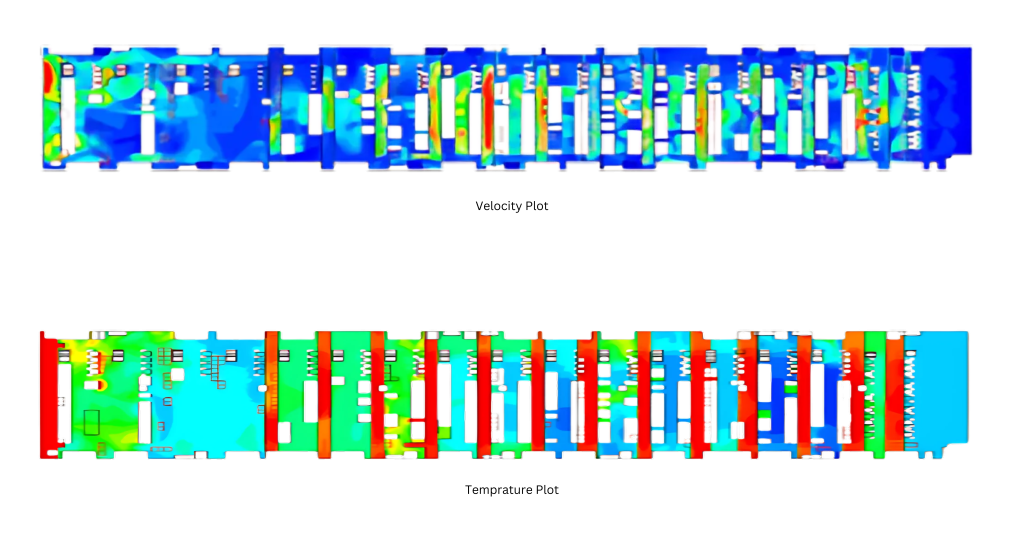
Thermal analysis of data center was carried out which had servers with variable heat loads. Due to the variable heat load, there were multiple hot spots, these hot spots were causing performance issues in the data center. Using CFD, the exact locations of the hot spots were predicted and based on “what if” analysis, the hot spots were eliminated. Further analysis was carried out to make the data center energy efficient. This was achieved by improving the ventilation system in the data center and removing the short-circuiting regions which was causing cold air from the floor being returned to AHU without being utilized properly.
BENEFITS
- Quick turnaround time to fix existing problem of hot spot.
- Energy efficient Data center design.
- ROI in three months on CFD investment.