
Background
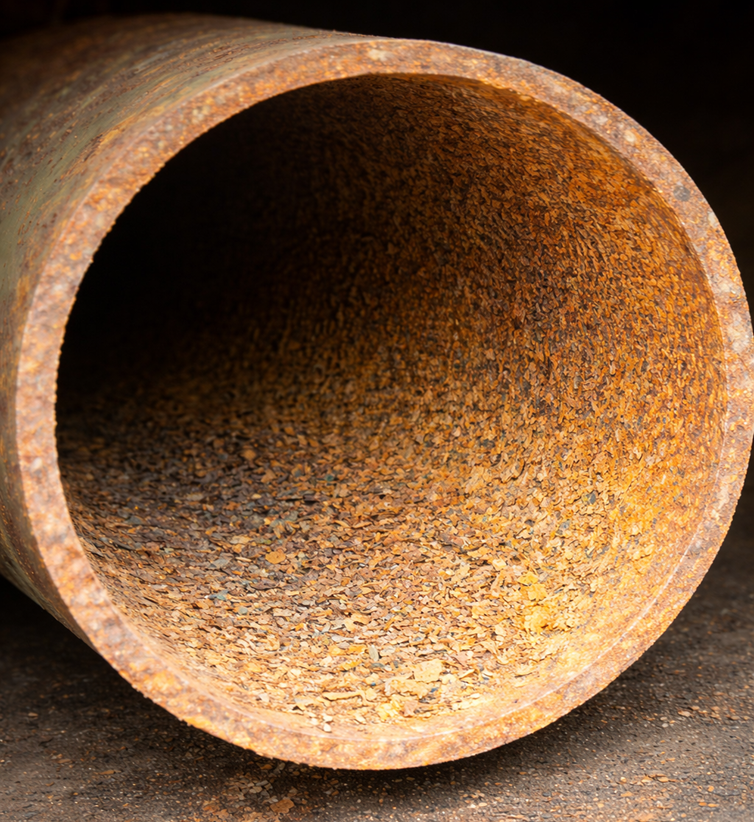
General metal loss caused by long-term corrosion is one of the most common degradation mechanisms in carbon steel piping systems operating in refinery and petrochemical environments. Unlike localized corrosion, general metal loss reduces wall thickness over a wide area, gradually decreasing the pressure-containing capacity of the piping. This case study presents a Fitness-For-Service (FFS) assessment of a straight piping segment affected by uniform internal corrosion. The objective of the assessment was to verify whether the piping could safely continue operation at its design pressure and to estimate the remaining service life based on the measured corrosion rate.
Piping and Operating Scenario
The piping segment was designed and fabricated in accordance with ASME B31.3 and was subjected to pressure-only loading. A standard carbon steel material commonly used in process piping was assumed. The line had been in continuous service for several years under stable operating conditions.
During routine inspection, internal corrosion was detected, which triggered a detailed wall thickness evaluation. No signs of localized pitting, cracking, deformation, or other damage mechanisms were observed. The degradation was therefore classified as general metal loss, uniformly distributed along the pipe wall.
The piping operated at elevated pressure and moderate temperature. A future corrosion allowance was defined to account for continued wall thinning during service.
Inspection Data and Damage Characterization
Wall thickness measurements were obtained using a grid-based inspection method to establish the Critical Thickness Profile (CTP) in both the longitudinal and circumferential directions.
The inspection results showed:
• A consistent reduction in wall thickness across multiple locations
• A clearly identifiable minimum measured thickness
• No sharp local minima indicative of localized corrosion
Based on the observed damage pattern and applied loading conditions, the piping was classified as a pressure-controlled component. This classification made it suitable for evaluation using general metal loss assessment criteria.
Assessment Philosophy
The Fitness-For-Service evaluation followed the methodology defined in API 579 / ASME FFS-1 Part 4, using a structured Level 1 followed by Level 2 assessment approach.
The assessment objectives were to:
• Compare measured wall thickness values with the required minimum thickness
• Evaluate acceptability at the design pressure
• Determine whether pressure re-rating was required
• Estimate remaining service life based on corrosion rate
This staged approach allows conservative screening at Level 1 while enabling a more refined and realistic evaluation at Level 2 when required.
Level 1 Assessment
The Level 1 assessment compared the average measured wall thickness, adjusted for future corrosion allowance, with the minimum required thickness for pressure containment.
The evaluation showed that:
• The adjusted average thickness was below the minimum required thickness
• The piping did not meet the Level 1 acceptance criteria
As a result, continued operation at design pressure could not be justified using Level 1 screening alone, and a higher-level assessment was required.
Level 2 Assessment
A Level 2 assessment was performed to reduce conservatism by incorporating:
A Level 2 assessment was performed to reduce conservatism by incorporating:
• Remaining Strength Factor (RSF) concepts
• Stress-based thickness requirements
• Recalculation of allowable pressure using measured thickness values
The Level 2 evaluation demonstrated that:
• The piping satisfied the Level 2 thickness acceptability criteria
• The recalculated allowable working pressure exceeded the design pressure
Based on these results, continued operation at the design pressure was considered acceptable, subject to defined monitoring and inspection requirements.
Remaining Life Evaluation
The remaining service life of the piping was estimated using the established corrosion rate. The calculation was based on the difference between the adjusted average wall thickness and the governing minimum allowable thickness.
The results indicated a finite remaining life, emphasizing the need for:
• Periodic inspection
• Ongoing corrosion monitoring
• Planned repair or replacement within the estimated service period
Engineering Conclusion
This assessment showed that although the piping did not satisfy the conservative Level 1 acceptance criteria, a refined Level 2 Fitness-For-Service evaluation confirmed its suitability for continued operation at the design pressure.
The case demonstrates that general metal loss, when accurately characterized and assessed using appropriate FFS methodologies, can be managed safely without unnecessary replacement while maintaining pressure integrity.