
Client Background
A manufacturer of downhole flow control devices required a predictive solution to assess the structural integrity and erosion life of flow adapter nozzles used in sand-laden crude oil environments. A critical requirement was to determine the time it would take for a ball to be released after erosion compromises the stopper wall. Through advanced nozzle erosion CFD analysis, the client gained a reliable method to predict ball release timelines and safeguard flow control performance.
Problem Statement
Due to the continuous flow of crude oil mixed with abrasive sand particles, the ball stopper region in the nozzle assembly is subjected to severe erosion, risking unintended ball release. The client needed to:
- Visualise erosion patterns on nozzle surfaces
- Identify high-risk areas for structural failure
- Predict the timeline for ball release under operational flow conditions
- Compare two nozzle configurations: 4 mm vs. 2.5 mm inlet diameter
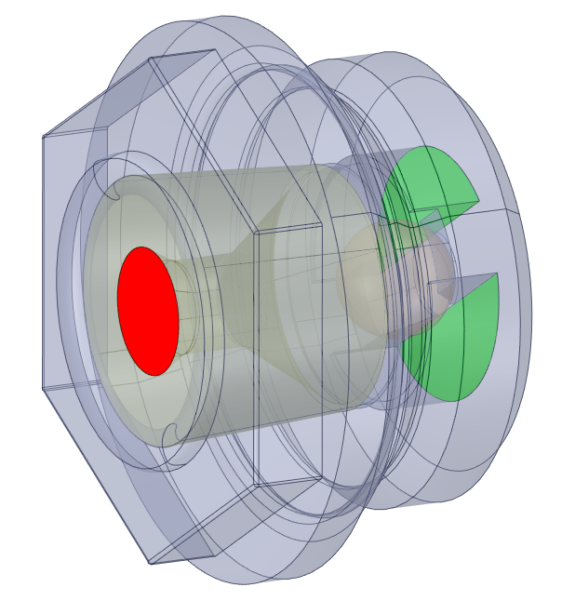
Engineering Approach
CFD Simulation Setup
• Simulation Type: Steady-state, isothermal
• Turbulence Model: k–ω (K-W) Model
• Flow Media: Crude oil with suspended sand particles
• Erosion Modelling: DPM (Discrete Phase Model)
• Inlet Pressure: 1000 PSI
Findings & Results :
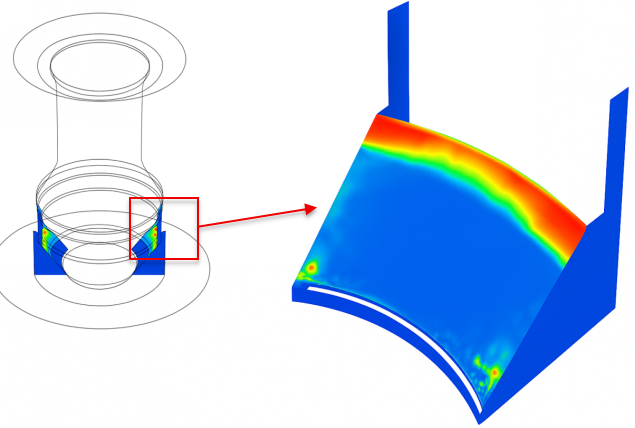
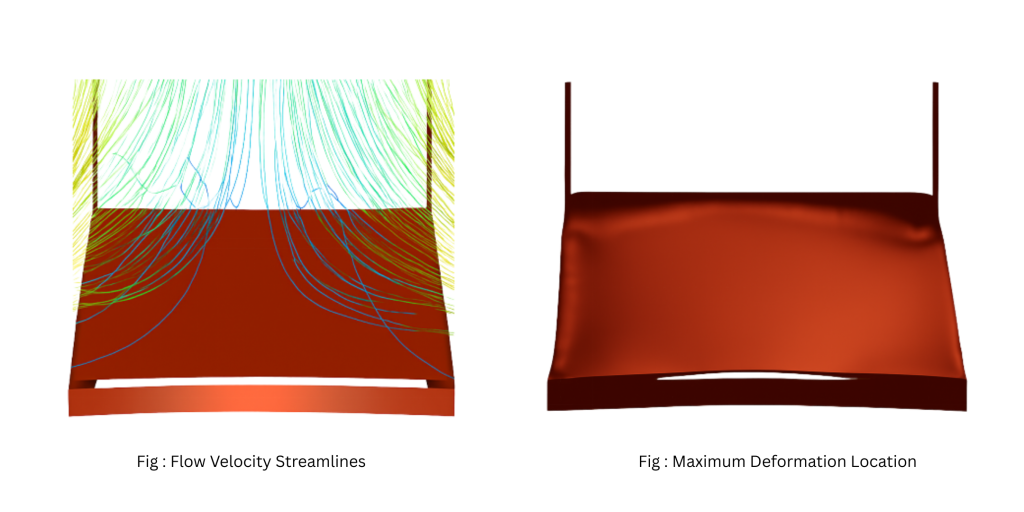
4 mm Nozzle
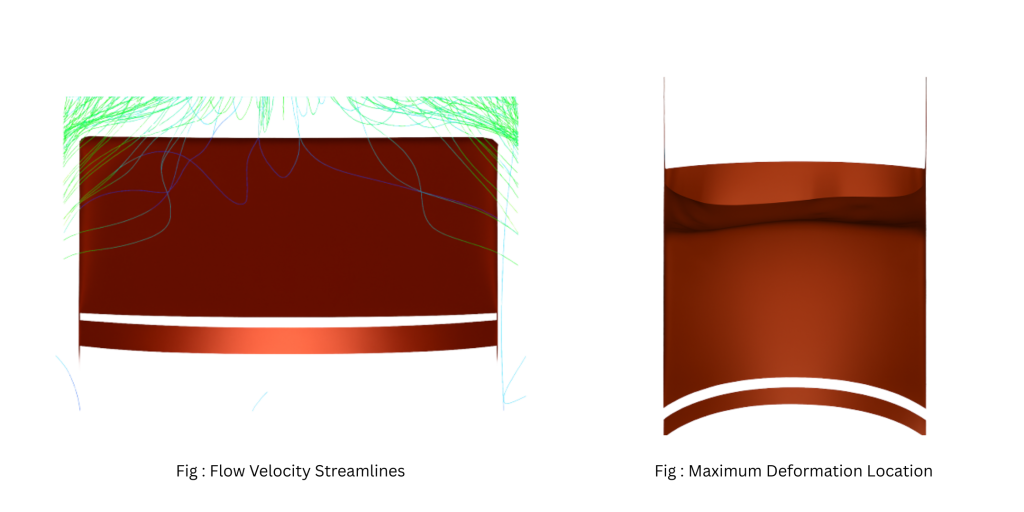
• Erosion localised at ball stopper corners
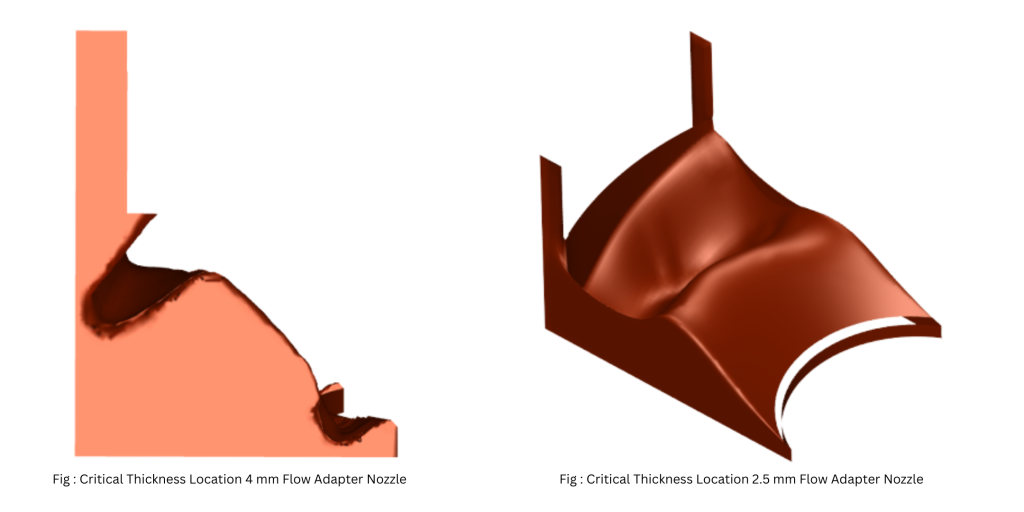
• Ball release predicted at ~60 minutes
• 0.6 mm deflection possible from erosion + flow pressure
• Progressive surface thinning observed in simulation
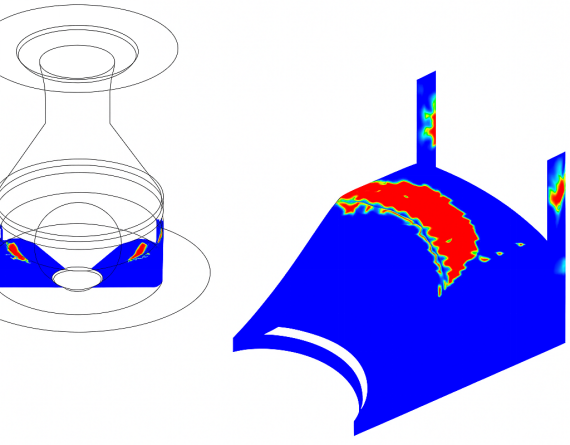
2.5 mm Nozzle
• Higher erosion due to a smaller diameter and flow recirculation
• Ball release predicted within 30 minutes
• Accelerated wall thinning and deformation observed
Conclusion
The CFD analysis helped predict ball release timelines, identify erosion hotspots, and guide design optimisations. Higher erosion rates in the 2.5 mm nozzle confirmed faster ball release (~30 min), whereas the 4 mm nozzle maintained structural integrity for up to 60 min. The results guided the selection of nozzle geometry for increased operational life. This predictive study showcases the value of nozzle erosion CFD analysis in extending equipment life and ensuring reliable oilfield operations.
Disclaimer: The results presented in this case study are based on specific CFD simulations conducted under defined assumptions and operating conditions. Actual performance may vary depending on geometry, fluid properties, and application parameters.