
Introduction
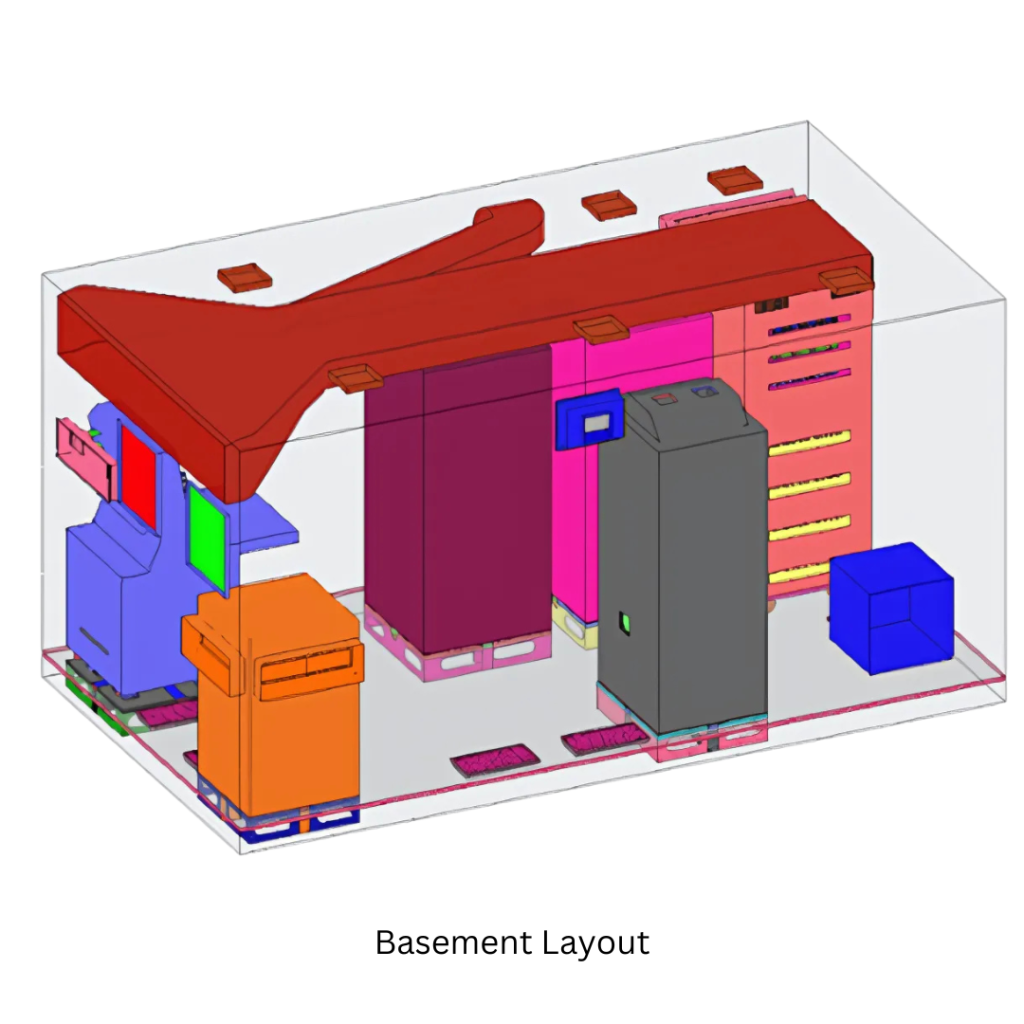
Shelter consists of many components like AC, UPS, workstation unit, PDB unit, batteries etc. It is important that AC duct design should be such that, it can supply required flow rate through the various louvers. Also, during normal operation when external power supply present, AC should maintain a temperature within various Units below critical limits. HVAC design becomes more complex with different heat loads on various Units. Hence performance of various Shelter units depends on efficient cooling, and this can be achieved by CFD. Also, in ‘No external power supply scenario’ CFD helps in determining the time for which temperature within various Shelter Units doesn’t exceed critical limits.
Challenges
- Design modifications of AC duct for uniform cooling of all Units.
- Modelling of heat dissipation within various Units due to forced convection.
- Modelling of combined Convection, Conduction & Radiation at Shelter outer surface.

SOLUTION
Initially CFD analysis of AC duct is carried out to determine the flow rates at various louver exits. As this flow rate were not matching with required flow rates hence several design modification iterations were carried out on duct design till required flow rate through various louvers is not achieved. By using this flow rates, Shelter CFD analysis is carried out for determining hot spots, dead regions & temperature within various Shelter Units and this temperature values are compared with critical limits. Further analysis was carried out for “External power shut off case” to determine the time for which temperature within various Shelter Units does not exceed critical limit. Hence CFD helped in determining the time for which Shelter Units can work without any issue when there is power shut off.
BENEFITS
- Design improvements of AC duct for delivering required flow rates through louvers.
- Virtual testing of Shelter in normal operational & external power shut of scenarios.
- Predicted design modifications as per CFD results & thermal requirement.
- Reduced number of trials for HVAC design.