

Engineering Case Study: FEA Analysis of Sour Condensate Flash Drum Stability in PWHT Conditions
November 22, 2024
CFD Simulation of Car Park Ventilation
February 5, 2025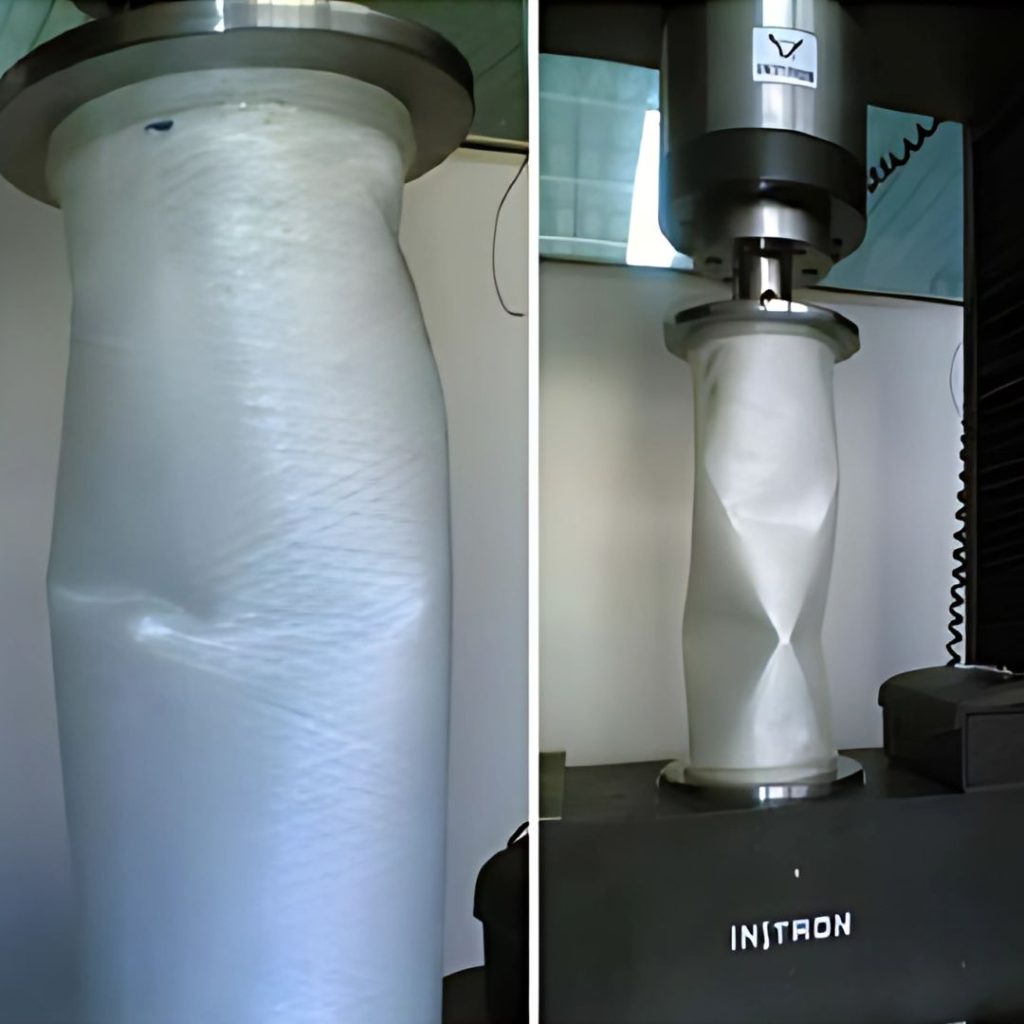
CASE STUDY HIGHLIGHTS
Client Profile: Process equipment manufacturer in India & Abroad
Introduction:
Most of the process equipments are subjected to compressive loadings during their operation (e.g., Pressure vessel/ heat exchanger sub. to full vacuum). Sometimes this type of loading results into buckling of the component causing buckle failure of the structure. Hence a process equipment needs to be evaluated for any possible buckling failure. This type of failure is mainly observed in long vessels, vessels with larger diameter, vessels with improperly spaced stiffeners. Process equipment manufacturers from India & abroad approached Analyzer CAE Solutions Pvt Ltd to seek assistance in evaluating the design of their newly developed equipment against buckling failure using simulation techniques & provide the solution in case of any observed failure.
Workflow
- Determining the material properties for different MoCs of equipment, design parameters to be considered in FEA.
- Preparing Finite Element Analysis Model for elastic buckling analysis. Here the element type is of utmost importance as very few elements gives reliable results of bifurcation analysis.
- Solving the FEA model for unit loading in ANSYS APDL Solver. The model is solved for bifurcation analysis (Eigenvalue buckling), which extracts different mode shapes of buckling failure along with frequencies of buckling failure.
- Performing the design factor calculations & it should be higher than the minimum design factor as defined for different type of constructions in clause 5.4 of ASME Sec. VIII Div.

Centre Pipe of Heat Exchanger is Evaluated for Buckling Failure against shell side pressure
CHALLENGES
- Deciding the element type which satisfies bifurcation & gives accurate results
- Performing Design factor calculations
THE SOLUTION
The structure was analysed using Finite Element Method for elastic buckling analysis. The loading used for this analysis is unit loading. The structure was solved for bifurcation analysis, & design factor calculations were performed. The results showed that the structure is the calculated design factor for the structure is greater than the minimum design factor as defined in clause 5.4 of ASME BPVC Sec. VIII Div. 2. Hence, the structure’s design was predicted to safe against buckle failure during its service life.